

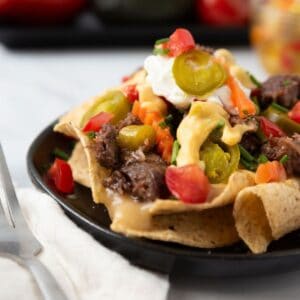
If you love a plate of seriously loaded nachos, these Pot Roast Nachos with a Midwest twist are right up your alley. Inspired by Ditka's Restaurant's famous Coach's Pot Roast Nachos, this homemade version takes the idea in an even more Chicago direction with spicy giardiniera, tender pot roast, homemade brown gravy, and a giardiniera-infused melty cheese sauce.
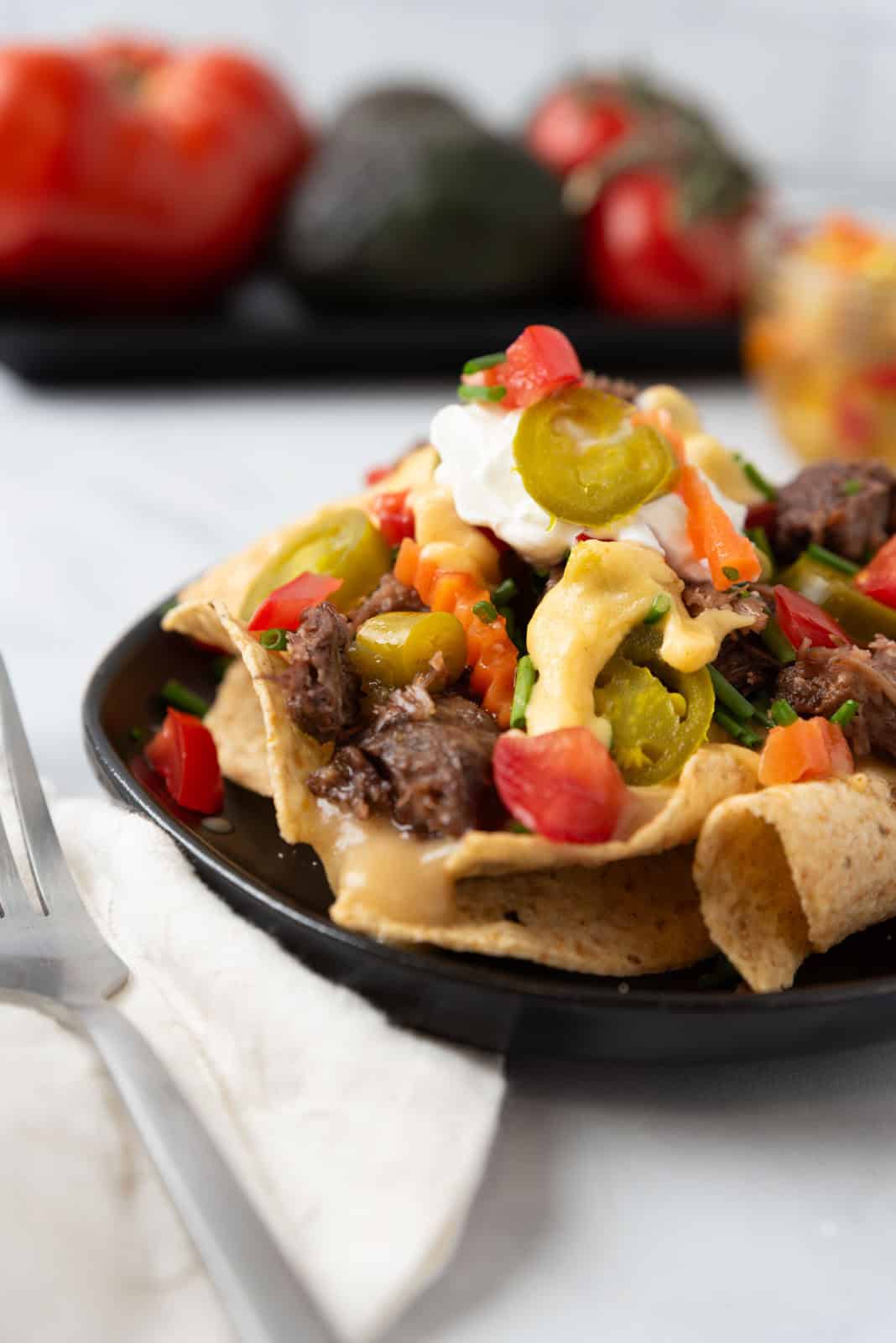
Obviously, I have a soft spot for Chicago food, and as a huge Chicago Bears fan, I am always happy to find another way to put a little more Windy City personality on a game day spread. The key was obvious: giardiniera. It brings the salty, tangy, slightly spicy flavor that makes Chicago Italian Beef sandwiches so irresistible. The pot roast for these beef nachos is slow-cooked with giardiniera, so the meat picks up the flavor from the beginning. Then the yummy cooking liquid is turned into a rich brown gravy and drizzled over crisp tortilla chips along with the cheese sauce. Add chopped tomatoes, sour cream, pickled jalapeños, more giardiniera, and scallions. The result is a big, messy, completely unapologetic appetizer that's especially good for a Super Bowl party, or any party for that matter.
Looking for more game day recipes? Try these: Game Day Beer Chili, Italian Beef Sandwiches, Jalapeno Bean Dip, and Sausage & Cream Cheese Stuffed Mini Peppers.
Why You'll Love These POT ROAST NACHOS
- They're loaded with actual flavor, not just toppings. There are several layers happening here. The beef is deeply seasoned and slow-cooked until tender. The giardiniera adds acidity and heat. The gravy brings savory beef flavor, while the cheese sauce adds creamy richness. Then the fresh toppings bring in brightness and additional texture. No one-dimensional flavor here.
- The giardiniera does double duty. This is my favorite part of the recipe. Adding giardiniera to the pot roast cooking liquid gives the pot roast flavor a tangy nod to the famous Chicago Italian beef. Adding more to the cheese sauce gives a great balance because the acidity of the giardiniera cuts through the richness of the cheese and gravy. If you are a serious giardiniera person, you can increase it in both places. And, obviously, I add more to garnish my plate of nachos!
- You can make most of it ahead. The pot roast can be cooked a day or two ahead, and the gravy can be made from the cooking liquid. The cheese sauce can also be prepared ahead and gently reheated, but it's super fast to make and is best made fresh right before assembly. The only thing I absolutely wouldn't do ahead is assemble the nachos. Tortilla chips, gravy, and cheese sauce are not a long-term relationship.
- They turn leftovers into something people actually get excited about. If you have leftover pot roast, this recipe becomes considerably faster. Chop the leftover beef, make or reheat the gravy, prepare the cheese sauce, and you're basically in business. You won't have the giardiniera in the cooking liquid, but for a quick nacho dinner when you want one, it still has terrific flavor!
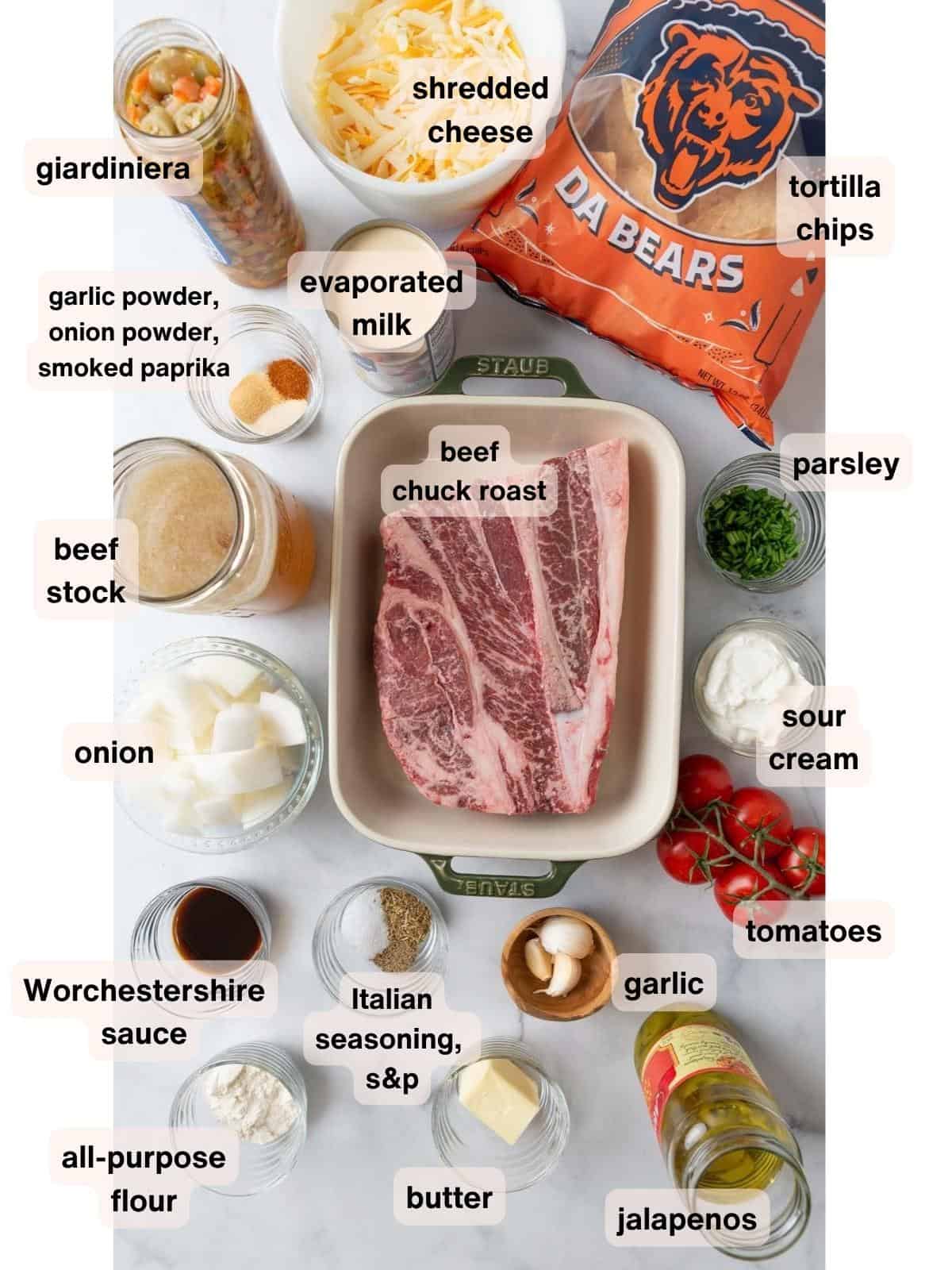
Nacho Ingredient Highlights
- Beef chuck roast: A well-marbled chuck roast is my first choice because the connective tissue breaks down during the long cooking time and gives you tender beef. Don't worry if the roast looks like too much meat for the nachos. Leftover pot roast is one of the best reasons to make this recipe.
- Giardiniera: This is the ingredient that gives these nachos their Midwest personality. Use your favorite giardiniera. Mild giardiniera works beautifully if you're feeding a crowd with different heat preferences. Hot giardiniera is the move if you like some serious kick. Drain excess oil before measuring the giardiniera for the cooking liquid and cheese sauce. You want the vegetables and peppers, not a puddle of oil.
- Tortilla chips: Use sturdy, restaurant-style tortilla chips rather than very thin chips. They need enough structure to support beef, cheese sauce, gravy, and toppings without immediately collapsing. These are not diet nachos. You need a chip that will do some heavy lifting.
- Evaporated Milk and Mexican Cheese Blend: This is one recipe where I intentionally make an exception to my usual rule about pre-shredded cheese. For the cheese sauce, I use evaporated milk and a pre-shredded Mexican cheese blend. A traditional cheese sauce made this way typically uses evaporated milk, cornstarch, and freshly shredded cheese. The evaporated milk helps create a smooth, creamy sauce, while the cornstarch helps stabilize the cheese. Here, however, you can take advantage of the anti-caking starch already coating the pre-shredded cheese. That means you can skip adding separate cornstarch to the sauce. The important part is temperature control. Don't boil the sauce, and don't dump all the cheese in at once over high heat. Keep the evaporated milk at a gentle simmer, reduce the heat, and add the cheese gradually while stirring constantly. If the sauce gets too hot, the fats and proteins can separate, leaving you with a grainy or broken cheese sauce. This is a recipe where technique matters more than taking a shortcut.
- Beef cooking liquid: Do not throw this away. After the pot roast is finished, the cooking liquid becomes the foundation for the brown gravy. This is one of the details that makes these nachos taste like they were built around the pot roast rather than simply topped with leftover beef.
- Tomatoes, sour cream, jalapeños, and scallions: These toppings aren't just decorative. The tomatoes add freshness and acidity, sour cream cools the heat, jalapeños bring another layer of pickled flavor, and scallions (green onions) or chives provide a fresh onion bite. Avocado is also a great garnish.
See the recipe card below for quantities.
Step-by-Step Instructions
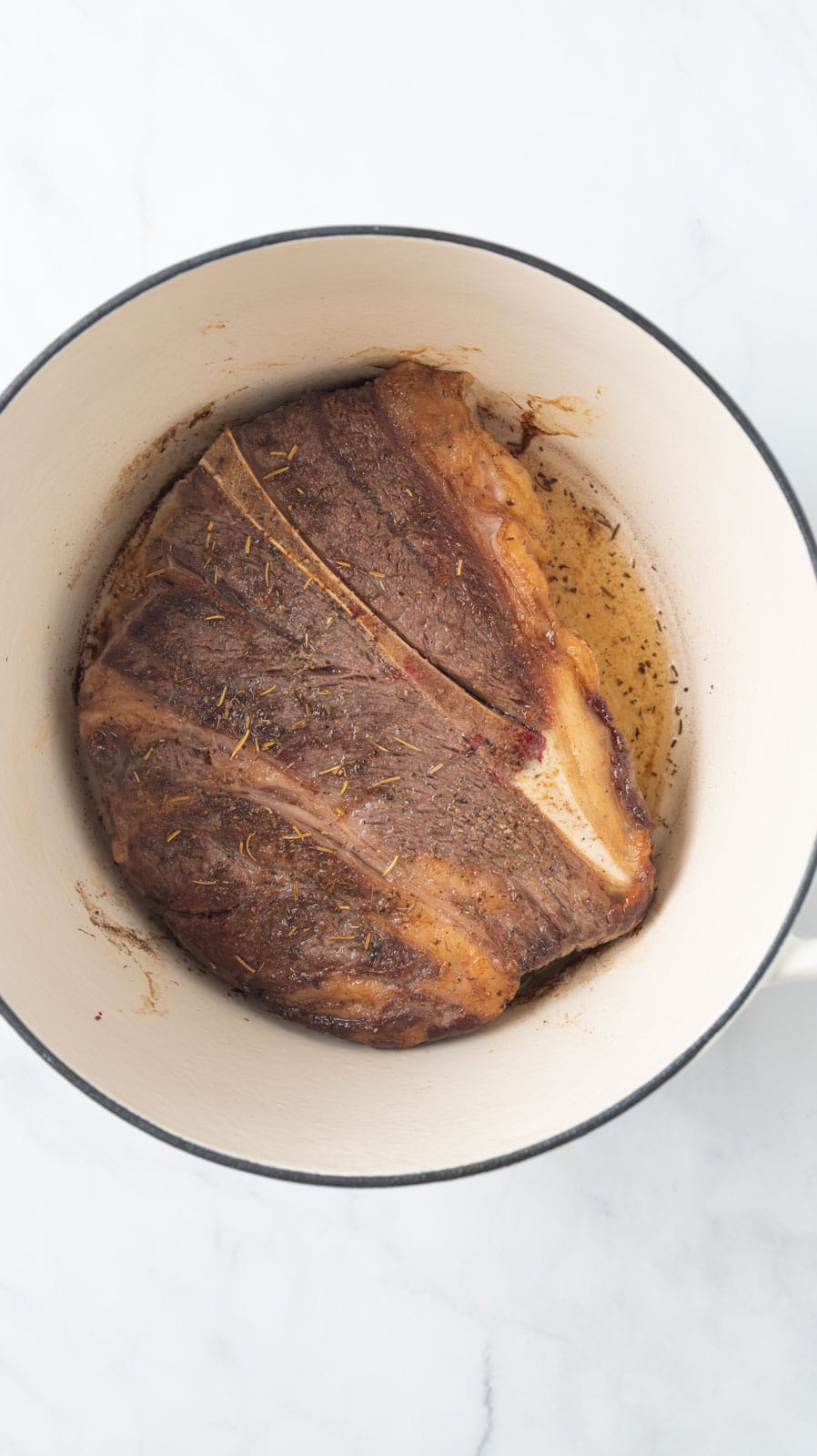
- Step 1: Season and sear the pot roast: Pat a 3 ½- to 4-pound beef chuck roast dry and season generously with kosher salt and black pepper. Heat a large Dutch oven over medium-high heat with a little neutral oil. Sear the roast on all sides until deeply browned. Don't rush this step. The browned exterior adds flavor to both the beef and the cooking liquid. Remove the roast and set it aside.
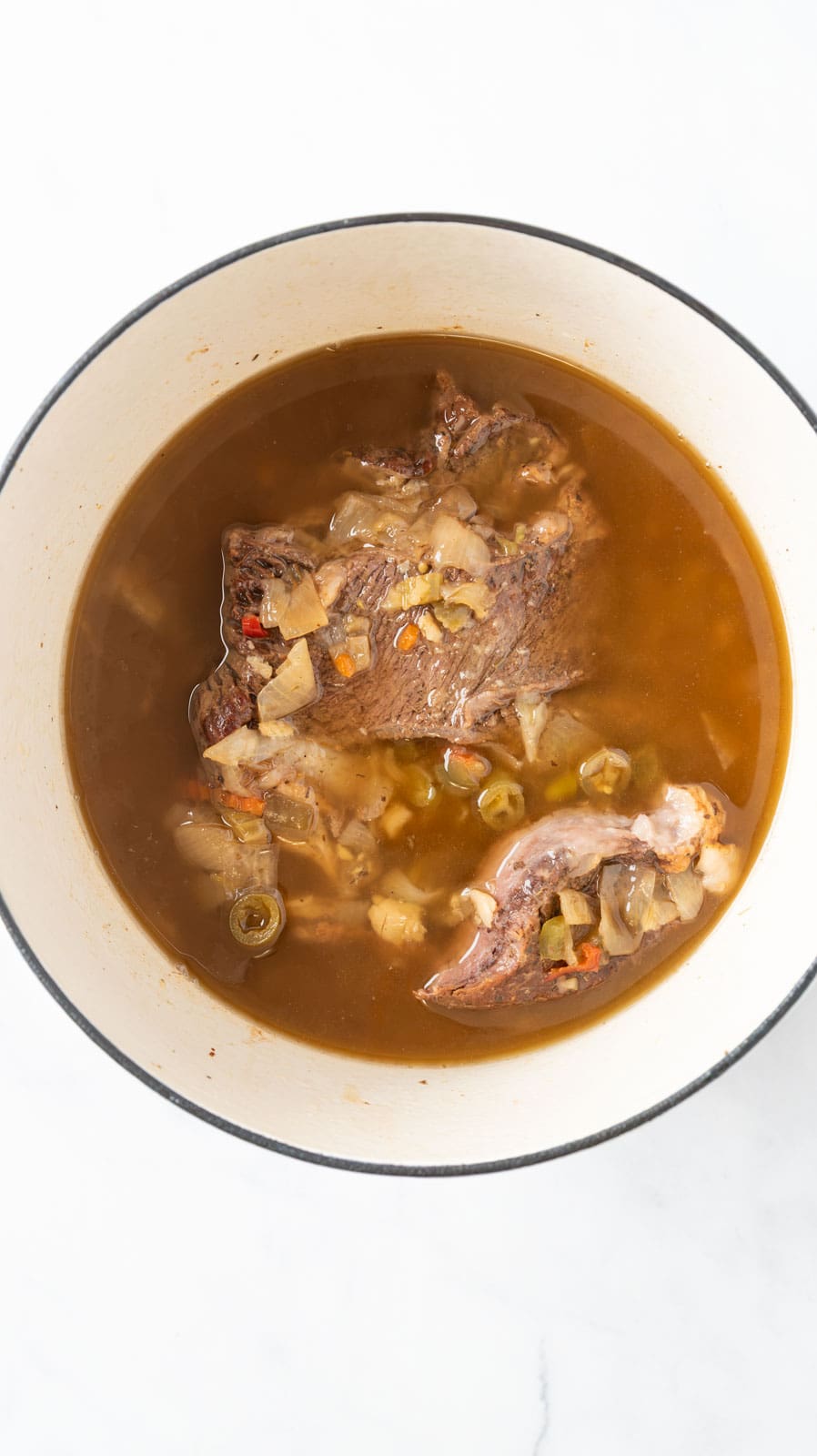
- Step 2: Build the cooking liquid & slow cook: Add chopped onion and garlic to the same Dutch oven and cook until softened. Pour in beef broth and scrape up the browned bits from the bottom of the pot. Add Worcestershire sauce, Italian seasoning, and about ½ cup drained and chopped giardiniera. Return the roast to the pot. The liquid should come about one-third to halfway up the sides of the roast. Cover the Dutch oven and place it in a 325°F oven. Cook for about 3 to 3 ½ hours, or until the beef is very tender and easily pulls apart with a fork. The exact cooking time will depend on the size and shape of your roast. Tenderness is a better indicator than the clock. Transfer the beef to a cutting board and let it rest for about 10 minutes before chopping.
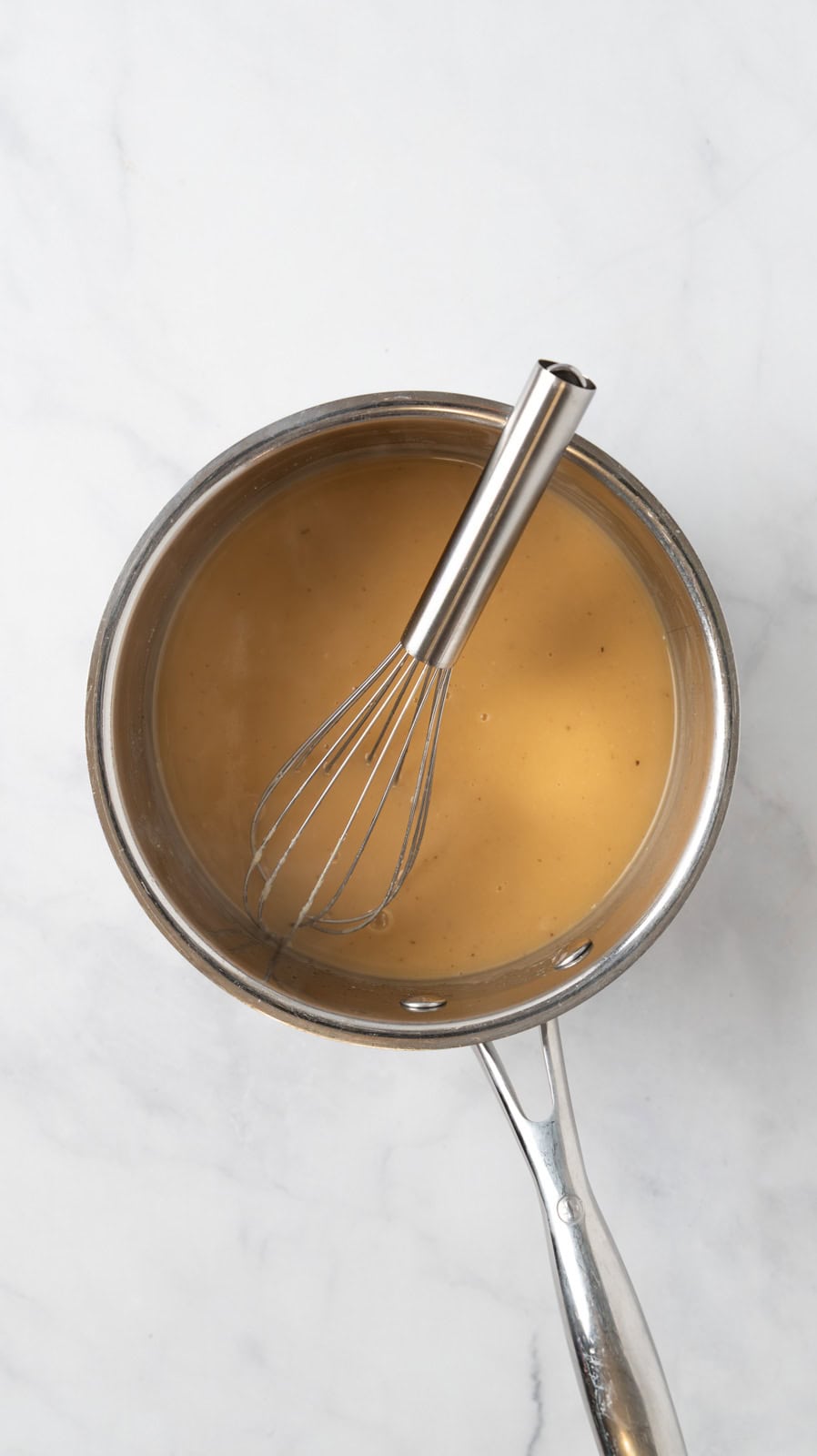
- Step 3: Make the brown gravy: Strain the cooking liquid, reserving the liquid and discarding the solids. Skim excess fat from the top. In a saucepan, melt butter and whisk in flour. Cook for a minute or two, then gradually whisk in about 2 cups of the reserved beef cooking liquid. Simmer until the gravy thickens enough to coat the back of a spoon. Taste before adding additional salt. The giardiniera, broth, and Worcestershire sauce may have already brought plenty of seasoning.
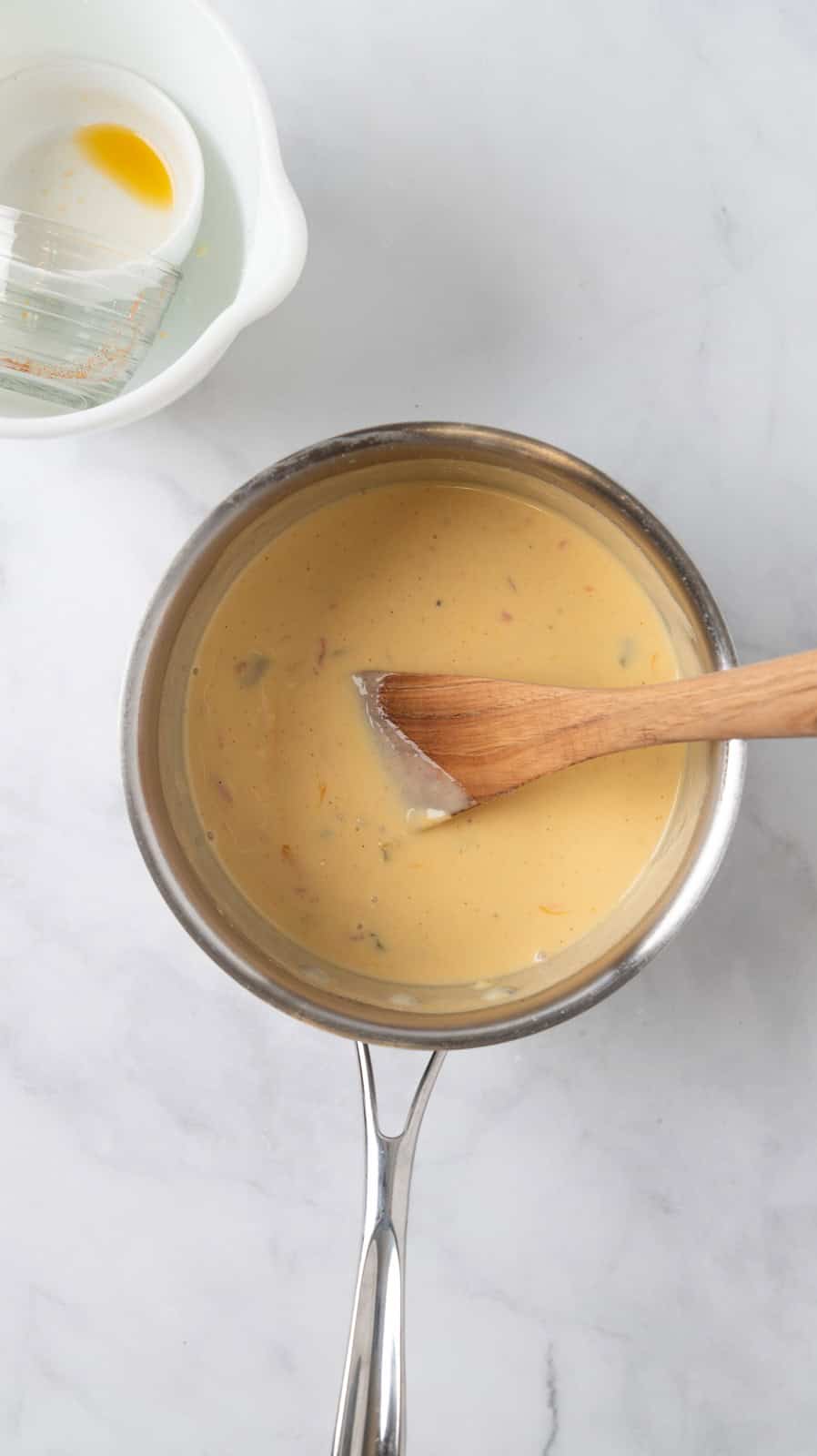
- Step 4: Make the giardiniera cheese sauce: Pour the evaporated milk into a medium saucepan and heat over medium-low heat until it is hot and just beginning to steam. You want it hot enough to melt the cheese but not boiling. Reduce the heat to low. Add the shredded Mexican cheese blend a small handful at a time, whisking or stirring constantly and allowing each addition to melt before adding more. Once the cheese sauce is smooth, stir in the garlic powder, onion powder, smoked paprika, and black pepper. Fold in the finely chopped, well-drained giardiniera. If the sauce is thicker than you'd like, add a small splash of warm evaporated milk or regular milk and stir until it reaches a smooth, pourable consistency. Keep the sauce warm over very low heat, stirring occasionally, until you're ready to assemble the nachos.
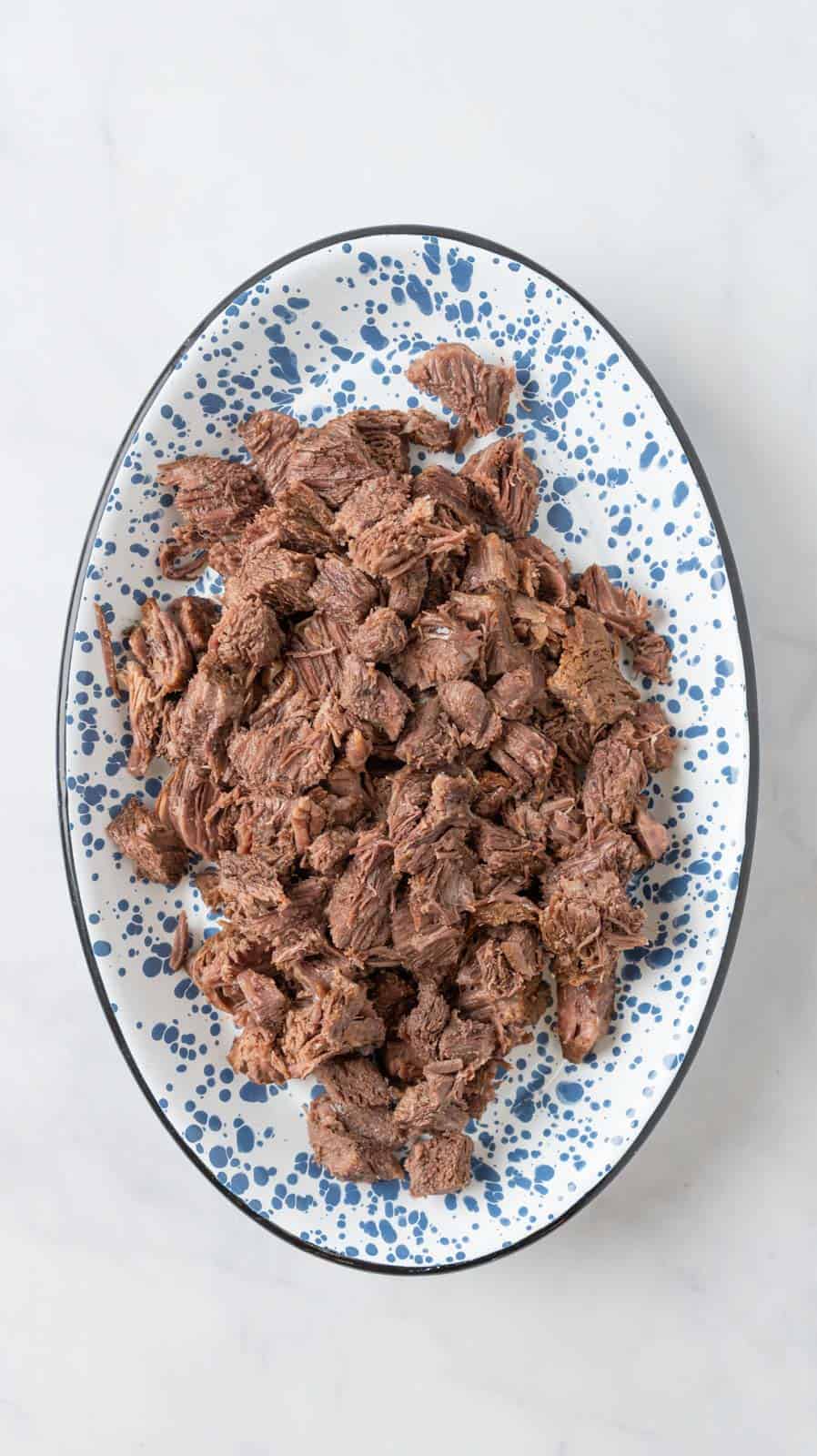
- Chop the pot roast: Remove any large pieces of fat or connective tissue from the pot roast and chop the beef into bite-size pieces. You don't want enormous chunks of beef on your nachos. Smaller pieces distribute the pot roast throughout the chips so you get some with nearly every bite.
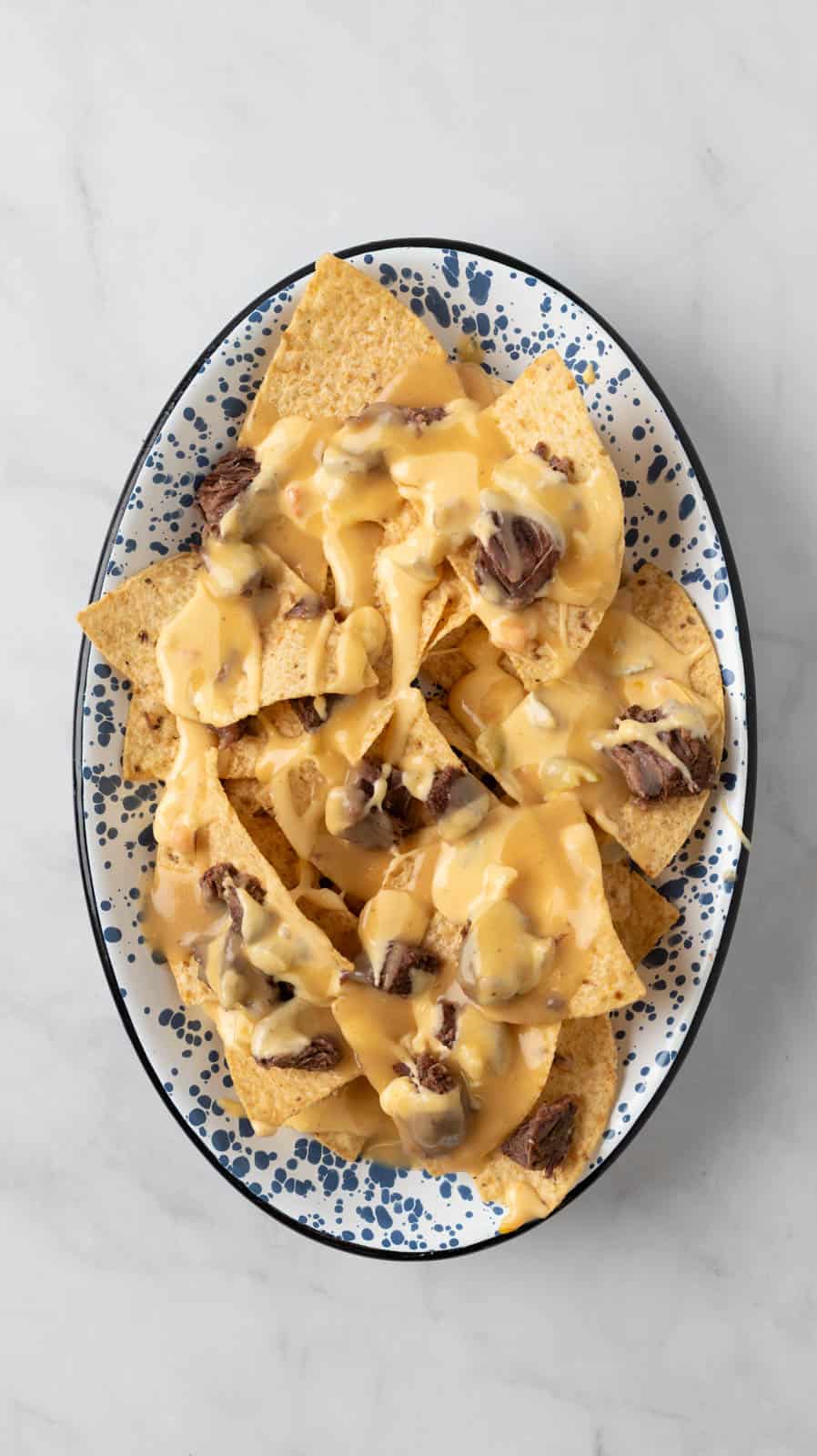
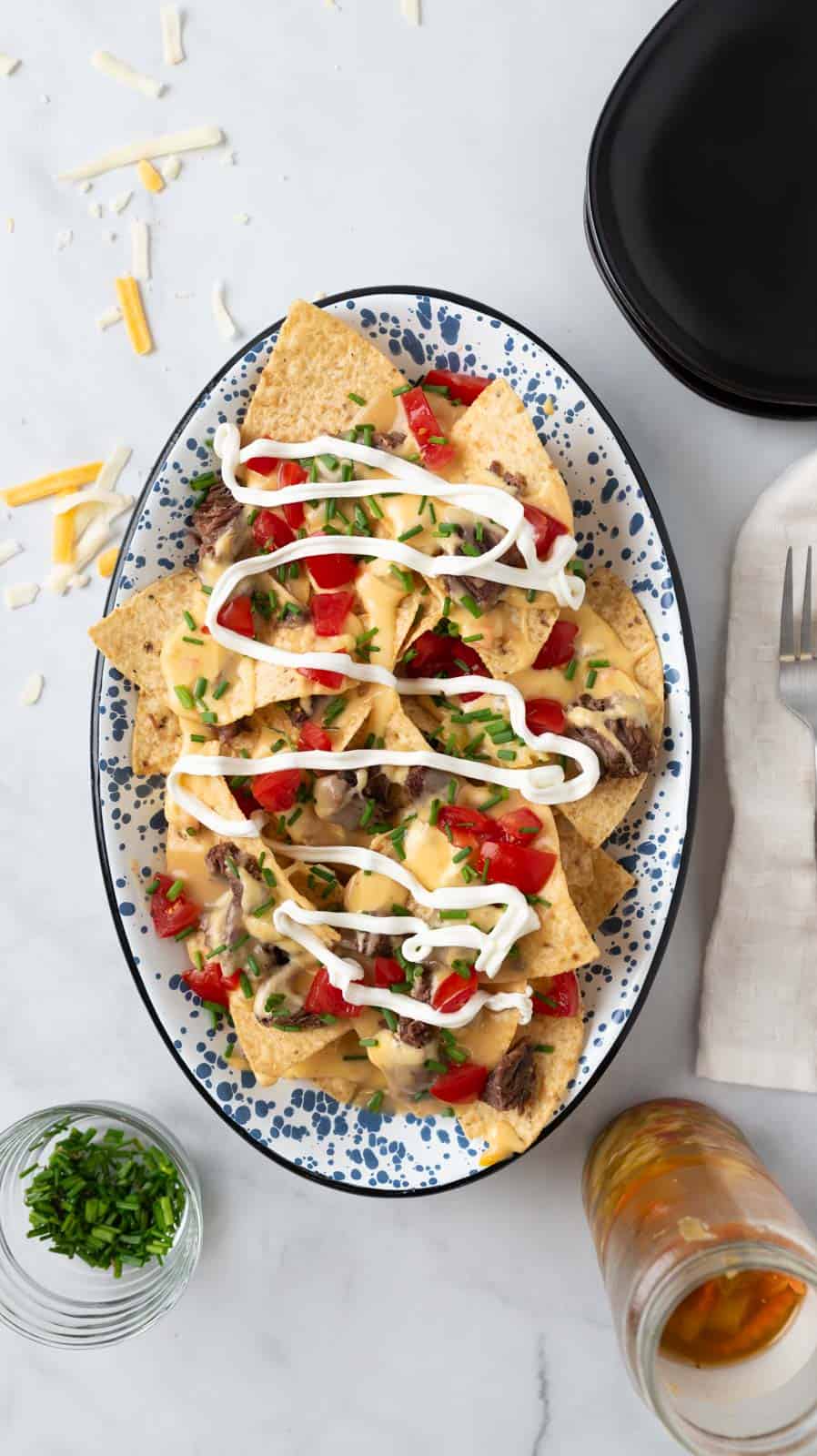
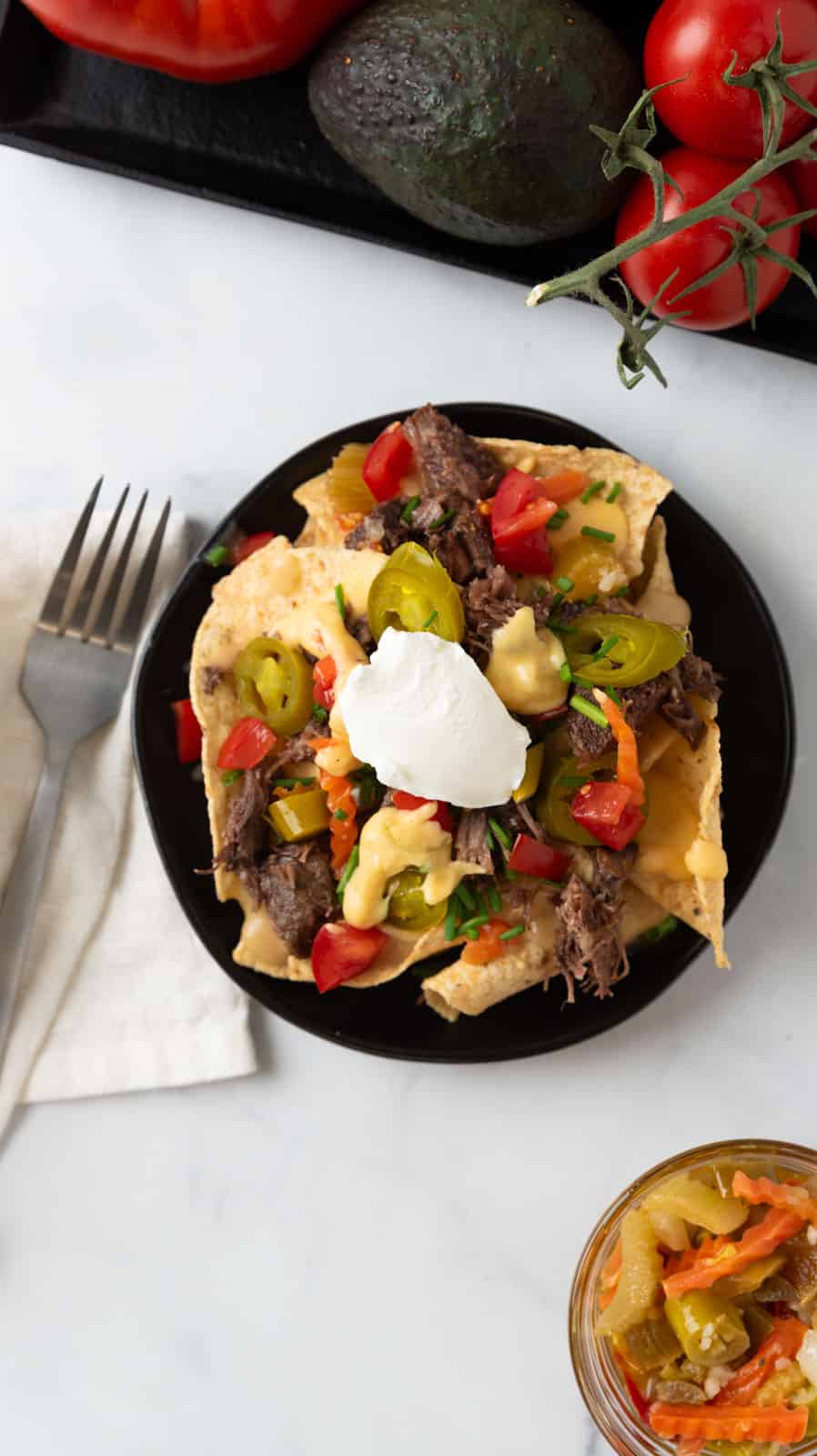
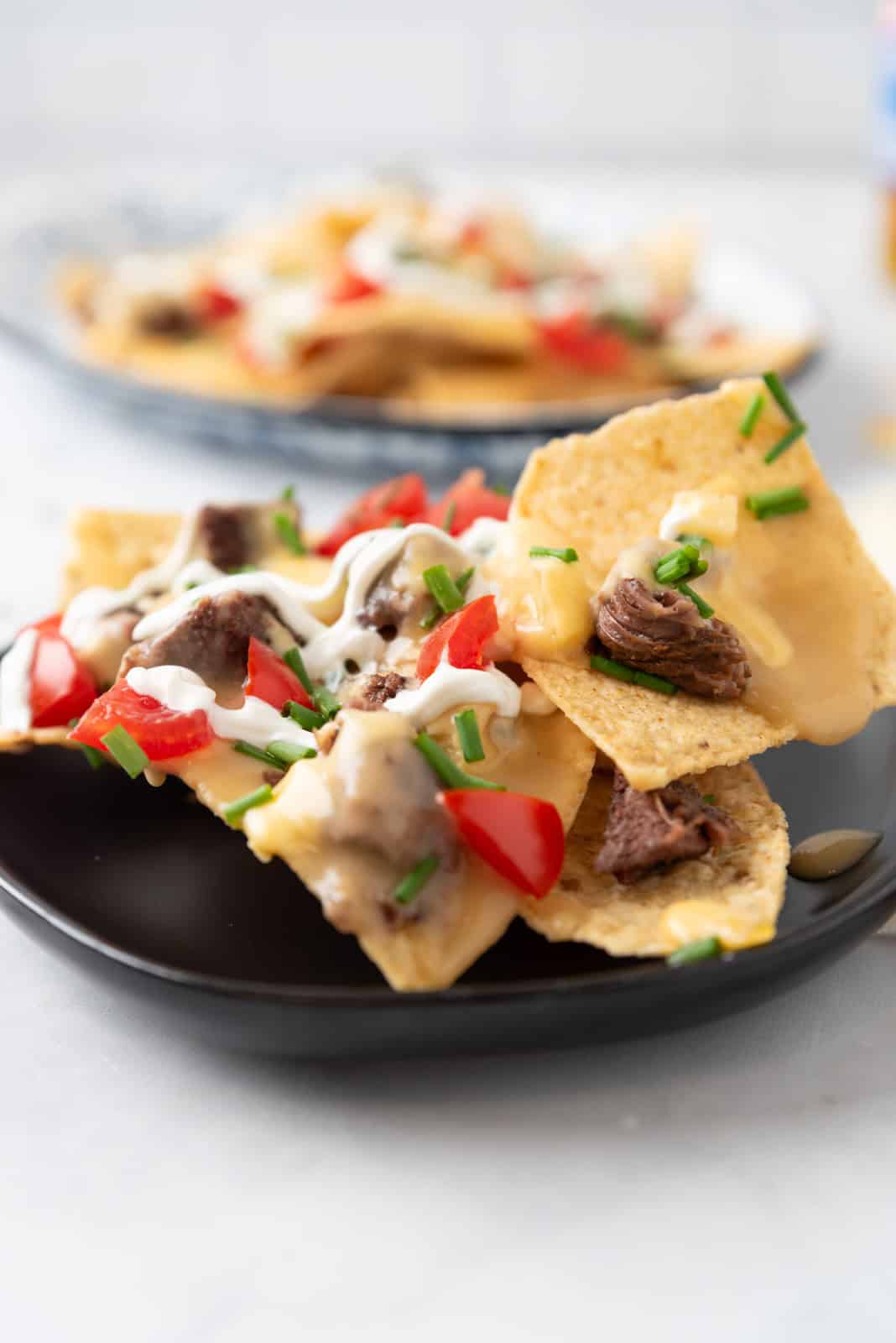
- Build the nachos: Spread an even layer of chips over a platter or small plates. Scatter chopped pot roast over the chips. Drizzle generously with the giardiniera cheese sauce. Add a few spoonfuls of brown gravy, being careful not to completely soak the chips. Top with chopped tomatoes, sour cream, pickled jalapeños, scallions, and additional giardiniera if desired. Serve immediately while the chips are still crisp.
Tips for Success
- Don't skip searing the roast. The browning isn't just for appearance. It gives the cooking liquid more depth, which ultimately makes your gravy better.
- Do not boil the cheese sauce. This is the step that can make or break this particular sauce. Evaporated milk gives you a very forgiving starting point, and the starch on the pre-shredded cheese helps stabilize the emulsion, but neither one can rescue a sauce that's overheated. High heat can cause the cheese proteins to tighten and the fat to separate, leaving you with a grainy or oily sauce instead of the smooth cheese sauce you're after. Use low heat, add the cheese gradually, and keep stirring. If the sauce does start to look slightly grainy, immediately remove it from the heat and whisk in a small splash of warm evaporated milk. Don't try to fix it by turning up the burner.
- Don't drown the chips. This is probably the biggest nacho mistake. Gravy and cheese sauce are delicious, but too much liquid turns tortilla chips into something closer to casserole noodles. Use enough to coat the nachos without soaking them.
- Drain the giardiniera. Especially when adding it to the cheese sauce. Excess oil can make the sauce greasy or interfere with its smooth texture. Drain it well and finely chop the vegetables before stirring them into the sauce.
- Taste your giardiniera before deciding how much to use. Giardiniera varies considerably in salt, acidity, oil, and heat. Start conservatively, especially if you're using a particularly spicy brand.
- Use pre-shredded cheese for this sauce on purpose. I almost always recommend shredding cheese yourself, and I still do for most recipes. But this is a deliberate exception. The anti-caking starch on pre-shredded Mexican cheese can serve the same practical purpose as the small amount of cornstarch traditionally used in this style of evaporated-milk cheese sauce. It helps stabilize the sauce without requiring an additional thickener. You can use freshly shredded cheese, but you'll want to add a small amount of cornstarch to achieve the same effect.
- Keep the heat low once you add the cheese. The evaporated milk should be hot before the cheese goes in, but the cheese itself should melt gently. High heat is the enemy of a smooth cheese sauce.
- Add the cheese gradually. Adding an entire bag of cheese to the pan at once can make it much harder to maintain a smooth emulsion. A handful at a time gives each addition a chance to melt evenly.
- Make the cheese sauce close to serving time. This sauce is best when freshly made and warm. If you need to make it ahead, reheat it very gently and loosen it with a splash of evaporated milk as needed.
Substitutions & Variations for Pot Roast Nachos
- Easy slow cooker method: Sear the roast first, then transfer it to a slow cooker with the broth, onion, garlic, Worcestershire sauce, seasonings, and giardiniera. Cook on LOW until the beef is tender, about 8 hours. Use the cooking liquid to make the gravy. You can also use an Instant Pot, though I have not tested this recipe using that method.
- Use leftover pot roast: This is a great shortcut. If you already have leftover pot roast, skip the roast-cooking steps and use approximately 3 to 4 cups chopped beef.
- Make them spicy or mild: Use hot giardiniera in the cheese sauce and add sliced pickled jalapeños and extra giardiniera on top. Use mild giardiniera and serve additional hot giardiniera on the side. That way everyone can control the heat.
- Add avocado: Diced avocado or a simple guacamole adds a creamy, fresh element that works particularly well with the spicy giardiniera.
- Waffle fries: Instead of tortilla chips, assemble these nachos using crispy waffle fries as the base.
Equipment Needed
- Large Dutch oven
- Large skillet or saucepan
- Fine-mesh strainer
- Cutting board
- Chef's knife
- Whisk
- Measuring cups and spoons
Storage Instructions
- Store the components separately.
- Refrigerate pot roast and gravy in airtight containers for up to 4 days. Store the cheese sauce separately and refrigerate for up to 3 days.
- Reheat the beef and gravy gently on the stovetop or in the microwave. Reheat the cheese sauce over low heat, adding a splash of milk if needed to loosen it.
- Once nachos have been assembled, they are best eaten immediately. Refrigerating assembled nachos will leave you with soft chips.
- For a party, keep the beef, gravy, and cheese sauce warm separately and assemble smaller batches of nachos throughout the event. This keeps the chips crisp and means guests aren't fighting over the last good corner of the pan.
Pot Roast Nachos Serving Suggestions
These are built for Super Bowl parties, football Sundays, game-day gatherings, and any other day nachos sound good, which is most days.
Serve them alongside:
- Chicago-style Italian beef sandwiches
- Italian beef sliders
- Crispy chicken wings
- Jalapeño poppers
- Italian beef dip
- A big chopped salad
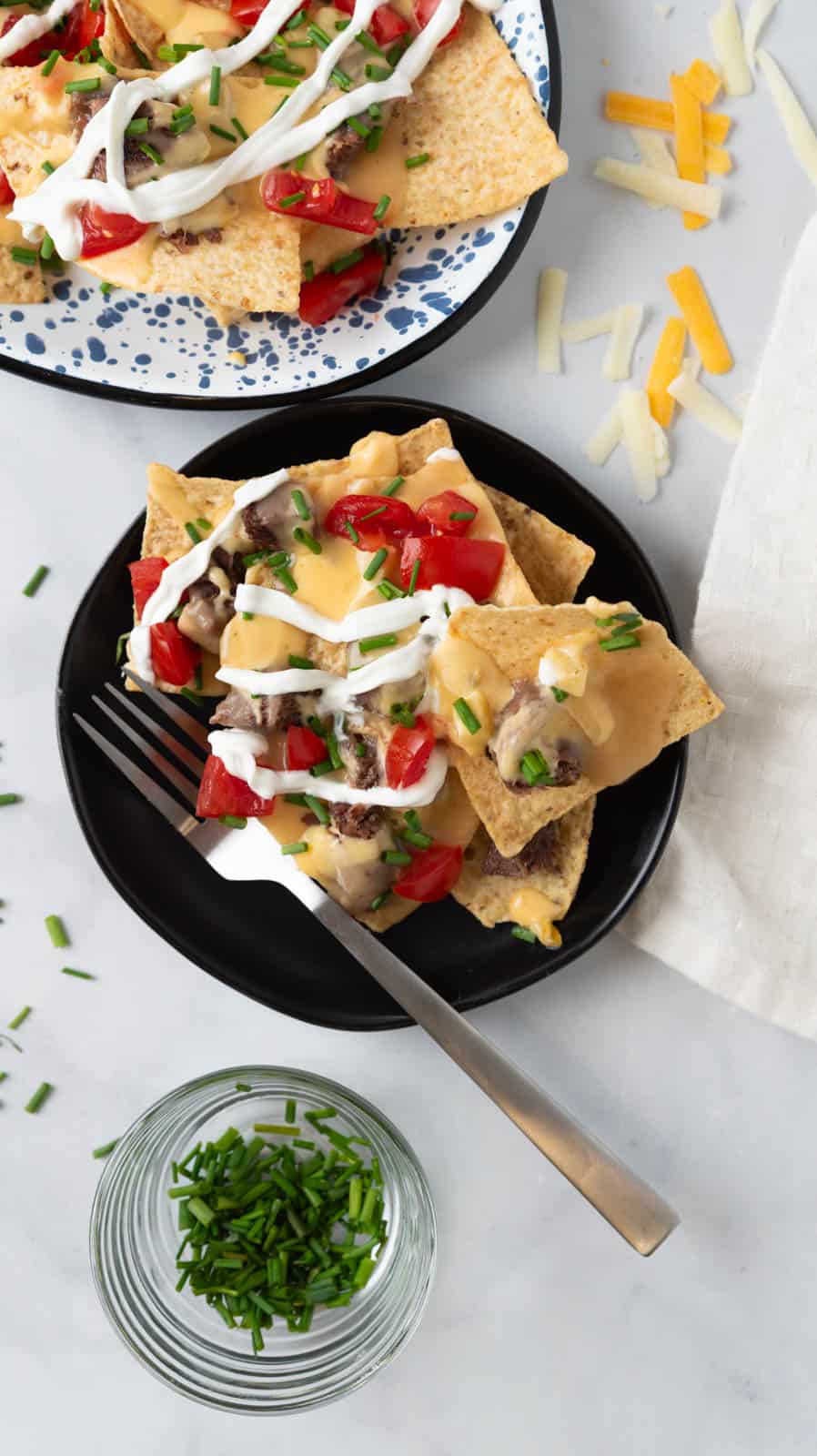
For a larger Super Bowl spread, I would make a few smaller plates of nachos rather than one enormous pan. The smaller batches stay crisp longer and are easier for guests to grab.
And if you're serving a crowd that doesn't agree on spice levels, put extra giardiniera, jalapeños, and sour cream on the side.
FAQs -
Yes. In fact, I recommend it if you're making these for a party. Cook the roast up to two days ahead, chop it, and refrigerate it with some of the cooking liquid. Make the gravy and cheese sauce closer to serving time. Or very gently reheat them if making them in advance.
Use sturdy tortilla chips, don't oversaturate them with gravy, and add wet toppings such as sour cream and tomatoes immediately before serving. For a party, assemble small plates of nachos as people are ready to eat them instead of making one giant pan.
Use a Chicago-style giardiniera you enjoy eating on its own. Mild is a good choice for a crowd. Hot giardiniera works beautifully if you want these nachos to have more heat. My go-to grocery store brand is Marconi. But a lot of speciality giardinieras are out there and delicious.
The most common culprit is too much heat. Cheese sauce can break when the cheese gets too hot, causing the proteins to tighten and the fat to separate. Keep the heat low once you begin adding the cheese, add it gradually, and stir continuously.
I wouldn't make that substitution in this recipe. Evaporated milk has less water and a higher concentration of milk proteins than regular milk, which makes it particularly useful for creating a creamy, stable cheese sauce. For the most reliable result, use evaporated milk.
Love This Pot Roast Nachos Recipe? Please tag @poppytrailtable on Instagram and Facebook and leave a star rating⭐ ⭐ ⭐ ⭐ ⭐ and review below! Thank you!
Recent Recipes:
Looking for more recipes to enjoy? Try these:
Recipe
Pot Roast Nachos with Giardiniera Cheese Sauce
Equipment
- Large Dutch oven
- Large skillet or saucepan
- Fine Mesh Strainer
- Cutting board
- Chef's knife
- Whisk
- Measuring cups and spoons
Ingredients
For the Pot Roast
- 3 ½ to 4 pounds beef chuck roast
- 2 tablespoons avocado or olive oil
- 1 medium yellow onion chopped
- 4 cloves garlic minced
- 3 cups beef broth
- 2 tablespoons Worcestershire sauce
- 1 teaspoon Italian seasoning
- ½ heaping cup giardiniera chopped
- 2 teaspoons kosher salt plus more as needed
- 1 teaspoon black pepper
For the Brown Gravy
- 3 tablespoons unsalted butter
- 3 tablespoons all-purpose flour
- 2 cups reserved pot roast cooking liquid
- kosher salt and black pepper to taste
For the Giardiniera Cheese Sauce
- 1 12-ounce can evaporated milk
- 12 ounces pre-shredded Mexican cheese blend
- ¼-½ cup giardiniera well-drained and chopped
- ½ teaspoon garlic powder
- ½ teaspoon onion powder
- ¼ teaspoon smoked paprika
- kosher salt and black pepper to taste
For the Nachos
- 16 ounces sturdy tortilla chips
- 3-4 cups shredded pot roast
- ¾-1 cup giardiniera cheese sauce
- ½-1 cup brown gravy
- 1 cup chopped tomatoes
- ½ cup sour cream
- ½ cup pickled jalapeños
- ½ cup sliced scallions
- Additional giardiniera for serving
Instructions
- Step 1: Season and sear the pot roast: Pat a 3 ½- to 4-pound beef chuck roast dry and season generously with kosher salt and black pepper. Heat a large Dutch oven over medium-high heat with a little neutral oil. Sear the roast on all sides until deeply browned. Don't rush this step. The browned exterior adds flavor to both the beef and the cooking liquid. Remove the roast and set it aside.
- Step 2: Build the cooking liquid & slow cook: Add chopped onion and garlic to the same Dutch oven and cook until softened. Pour in beef broth and scrape up the browned bits from the bottom of the pot. Add Worcestershire sauce, Italian seasoning, and about ½ cup drained and chopped giardiniera. Return the roast to the pot. The liquid should come about one-third to halfway up the sides of the roast. Cover the Dutch oven and place it in a 325°F oven. Cook for about 3 to 3 ½ hours, or until the beef is very tender and easily pulls apart with a fork. The exact cooking time will depend on the size and shape of your roast. Tenderness is a better indicator than the clock. Transfer the beef to a cutting board and let it rest for about 10 minutes before chopping.
- Step 3: Make the brown gravy: Strain the cooking liquid, reserving the liquid and discarding the solids. Skim excess fat from the top. In a saucepan, melt butter and whisk in flour. Cook for a minute or two, then gradually whisk in about 2 cups of the reserved beef cooking liquid. Simmer until the gravy thickens enough to coat the back of a spoon. Taste before adding additional salt. The giardiniera, broth, and Worcestershire sauce may have already brought plenty of seasoning.
- Step 4: Make the giardiniera cheese sauce: Pour the evaporated milk into a medium saucepan and heat over medium-low heat until it is hot and just beginning to steam. You want it hot enough to melt the cheese but not boiling. Reduce the heat to low. Add the shredded Mexican cheese blend a small handful at a time, whisking or stirring constantly and allowing each addition to melt before adding more. Once the cheese sauce is smooth, stir in the garlic powder, onion powder, smoked paprika, and black pepper. Fold in the finely chopped, well-drained giardiniera. If the sauce is thicker than you'd like, add a small splash of warm evaporated milk or regular milk and stir until it reaches a smooth, pourable consistency. Keep the sauce warm over very low heat, stirring occasionally, until you're ready to assemble the nachos.
- Step 5: Chop the pot roast: Remove any large pieces of fat or connective tissue from the pot roast and chop the beef into bite-size pieces. You don't want enormous chunks of beef on your nachos. Smaller pieces distribute the pot roast throughout the chips so you get some with nearly every bite.
- Step 6: Build the nachos: Spread an even layer of chips over a platter or small plates. Scatter chopped pot roast over the chips. Drizzle generously with the giardiniera cheese sauce. Add a few spoonfuls of brown gravy, being careful not to completely soak the chips. Top with chopped tomatoes, sour cream, pickled jalapeños, scallions, and additional giardiniera if desired. Serve immediately while the chips are still crisp.
Notes
Storage Instructions
- Store the components separately.
- Refrigerate pot roast and gravy in airtight containers for up to 4 days. Store the cheese sauce separately and refrigerate for up to 3 days.
- Reheat the beef and gravy gently on the stovetop or in the microwave. Reheat the cheese sauce over low heat, adding a splash of milk if needed to loosen it.
- Once nachos have been assembled, they are best eaten immediately. Refrigerating assembled nachos will leave you with soft chips.
- For a party, keep the beef, gravy, and cheese sauce warm separately and assemble smaller batches of nachos throughout the event. This keeps the chips crisp and means guests aren't fighting over the last good corner of the pan.
Tips for Success
- Don't skip searing the roast. The browning isn't just for appearance. It gives the cooking liquid more depth, which ultimately makes your gravy better.
- Do not boil the cheese sauce. This is the step that can make or break this particular sauce. Evaporated milk gives you a very forgiving starting point, and the starch on the pre-shredded cheese helps stabilize the emulsion, but neither one can rescue a sauce that's overheated. High heat can cause the cheese proteins to tighten and the fat to separate, leaving you with a grainy or oily sauce instead of the smooth cheese sauce you're after. Use low heat, add the cheese gradually, and keep stirring. If the sauce does start to look slightly grainy, immediately remove it from the heat and whisk in a small splash of warm evaporated milk. Don't try to fix it by turning up the burner.
- Don't drown the chips. This is probably the biggest nacho mistake. Gravy and cheese sauce are delicious, but too much liquid turns tortilla chips into something closer to casserole noodles. Use enough to coat the nachos without soaking them.
- Drain the giardiniera. Especially when adding it to the cheese sauce. Excess oil can make the sauce greasy or interfere with its smooth texture. Drain it well and finely chop the vegetables before stirring them into the sauce.
- Taste your giardiniera before deciding how much to use. Giardiniera varies considerably in salt, acidity, oil, and heat. Start conservatively, especially if you're using a particularly spicy brand.
- Use pre-shredded cheese for this sauce on purpose. I almost always recommend shredding cheese yourself, and I still do for most recipes. But this is a deliberate exception. The anti-caking starch on pre-shredded Mexican cheese can serve the same practical purpose as the small amount of cornstarch traditionally used in this style of evaporated-milk cheese sauce. It helps stabilize the sauce without requiring an additional thickener. You can use freshly shredded cheese, but you'll want to add a small amount of cornstarch to achieve the same effect.
- Keep the heat low once you add the cheese. The evaporated milk should be hot before the cheese goes in, but the cheese itself should melt gently. High heat is the enemy of a smooth cheese sauce.
- Add the cheese gradually. Adding an entire bag of cheese to the pan at once can make it much harder to maintain a smooth emulsion. A handful at a time gives each addition a chance to melt evenly.
- Make the cheese sauce close to serving time. This sauce is best when freshly made and warm. If you need to make it ahead, reheat it very gently and loosen it with a splash of evaporated milk as needed.



Comments
No Comments