

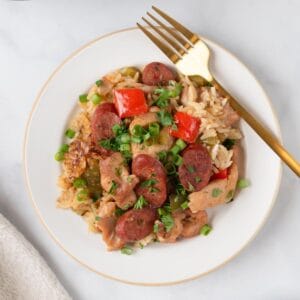
This Chicken Dirty Rice is a hearty one-pot dinner made with tender chicken thighs, savory chicken sausage, jasmine rice, and the Cajun holy trinity of onion, celery, and bell pepper. Everything simmers together in seasoned chicken stock, so the rice absorbs all the savory flavor from the browned chicken, sausage, vegetables, herbs, and spices.
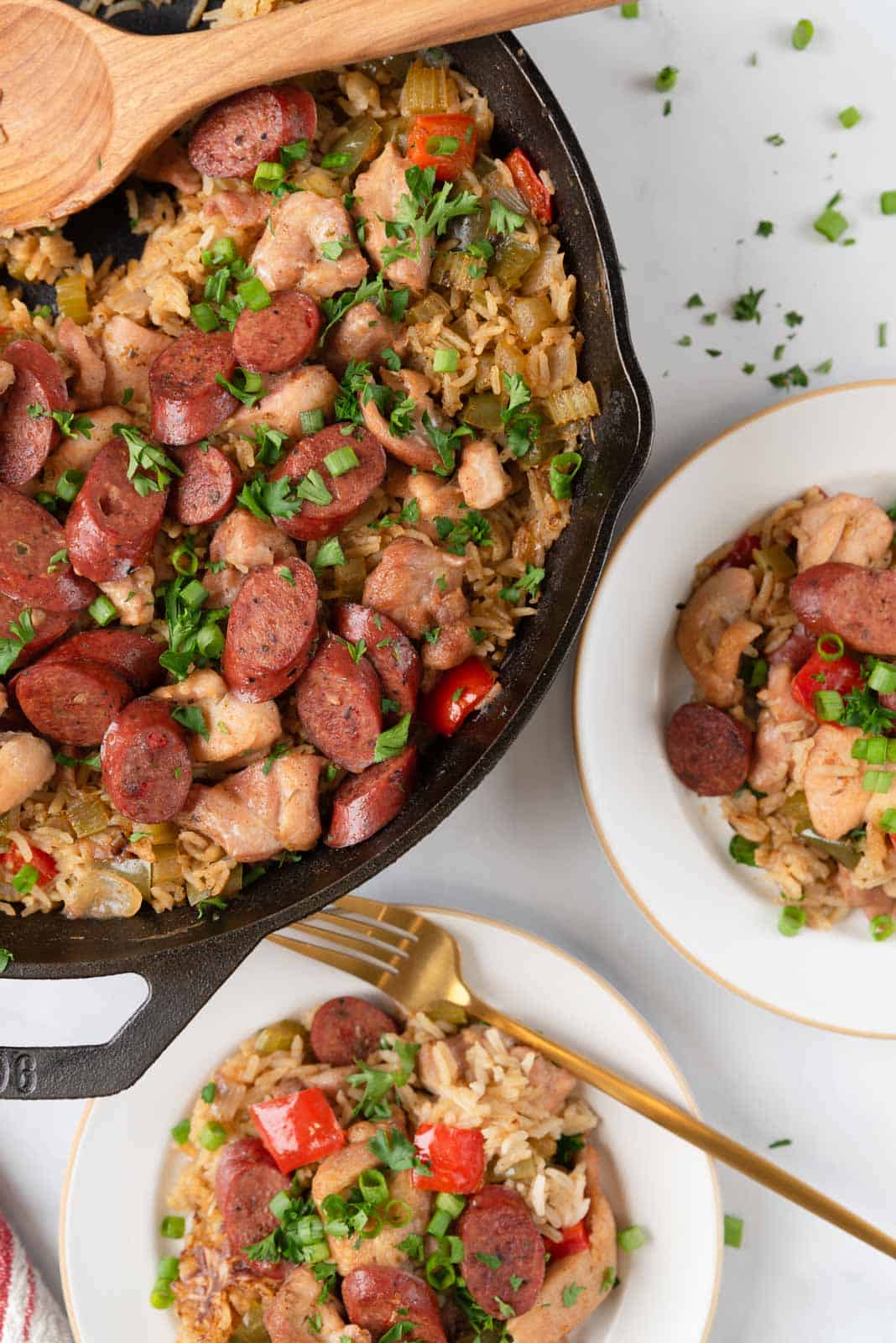
Traditional dirty rice has a lot going for it, but recipes evolve because families do. I wanted the deeply savory, seasoned rice dish I love without pork sausage or chicken liver, and chicken thighs plus chicken sausage turned out to be a great answer. The key is not any one fancy ingredient. It's the technique: brown the meat, give the vegetables time to develop flavor, season the cooking liquid, use the right rice, and then leave the lid alone while everything cooks. Do those things, and you end up with tender chicken, savory sausage, fluffy seasoned rice, and a dinner that tastes like you spent considerably more time on it than you actually did. And there's only one pan to wash. I'll take that win.
This recipe takes about 50-60 minutes from start to finish and is different from traditional dirty rice because it skips the pork and chicken liver but keeps the deeply savory character of the classic. The ingredients that matter most are the chicken sausage, long grain rice, chicken stock, and "holy trinity" aromatic vegetables. Properly browning the meat, rinsing the rice, and keeping the lid on while the rice cooks are the keys to getting the texture right.
It's also an excellent make-ahead dinner. Leftovers keep for up to 4 days in the refrigerator and freeze well.
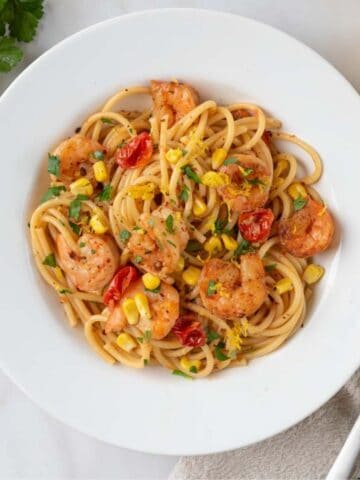
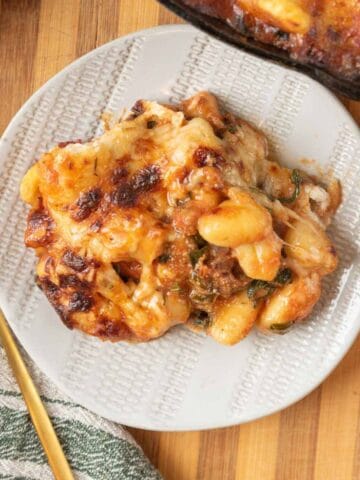
Looking for more quick dinner recipes? Try these: Baked Gnocchi with Sausage & Spinach, One Pan Salmon Orzo with Artichokes & Zucchini, One Pan Lemon Garlic Shrimp, and Old Bay Shrimp Pasta!
Why this recipe works
- Browning the chicken and sausage first creates flavorful browned bits that become part of the cooking liquid.
- The holy trinity of onion, celery, and bell pepper builds the savory foundation of the dish.
- Jasmine or long-grain white rice cooks directly in the seasoned stock, absorbing all those flavors rather than being cooked separately.
- Worcestershire sauce adds umami and a little acidity, which helps round out the richness.
- A short rest at the end allows the rice to finish steaming and the moisture to redistribute.
And, perhaps most importantly for a weeknight dinner, everything happens in one pan. I will continue to hold out hope that one of my children will suddenly find joy in washing dishes, but so far, no luck.
Why you'll love Chicken Dirty Rice
- Big flavor without liver or pork sausage. Chicken thighs and chicken sausage bring plenty of savory richness.
- One-pot dinner. The meat, vegetables, and rice all cook together in one pan.
- Weeknight-friendly. Dinner is ready in about 50-60 minutes.
- Great for meal prep. The leftovers reheat beautifully.
- Simple ingredients. Everything is easy to find at a regular grocery store.
- Easy to customize. Adjust the cayenne to your preferred level of heat.
- A complete meal. Protein, vegetables, and rice all come together in one satisfying dish.
Jump to:
- What is dirty rice?
- Ingredient Highlights
- Step-by-Step Instructions
- Tips for perfect Chicken Dirty Rice
- What I learned testing this recipe
- What can go wrong with Chicken Dirty Rice?
- Substitutions & Variations
- Equipment Needed
- Storage Instructions
- Chicken Dirty Rice Serving Suggestions
- FAQs: Chicken Dirty Rice Recipe
- Recent Recipes:
- Recipe
- Reviews
What is dirty rice?
Dirty rice is a classic Louisiana dish made by cooking white rice with meat, aromatics, herbs, spices, and flavorful stock. The rice gets its characteristic "dirty" appearance from the browned meat and seasonings that color the rice as everything cooks together. The foundation is the Cajun holy trinity of onion, celery, and bell pepper, followed by garlic, paprika, thyme, oregano, Worcestershire sauce, and chicken stock. The rice cooks directly in that flavorful liquid, absorbing everything as it becomes tender. (Read more about it in this Tasting Table article.)
Traditional dirty rice includes chicken livers, giblets, ground beef, or pork. This version takes the same basic idea and makes it with browned chicken thighs and chicken sausage instead. I happen to love chicken livers, but the same can not be said for everyone else in my house. Chicken livers are not a hill I'm willing to die on. So, out with the liver and in with things my family will eat. You don't need liver to make flavorful dirty rice, though. In this version, browned chicken, chicken sausage, paprika, herbs, Worcestershire sauce, and chicken stock provide plenty of savory depth.
Cajun vs Creole Dirty Rice
Cajun and Creole cooking share many ingredients and techniques, so the distinction isn't always as simple as one ingredient making a dish one or the other. Generally, Cajun dirty rice tends to be darker and more rustic, often featuring chicken livers, giblets, or pork. Creole versions may include tomatoes and a broader range of ingredients. This recipe leans into the Cajun-inspired flavors of the holy trinity, herbs, spices, and savory meat while making a few changes to keep it approachable for an everyday family dinner.
Escoffier does a wonderful deep dive into both cuisines in this article.
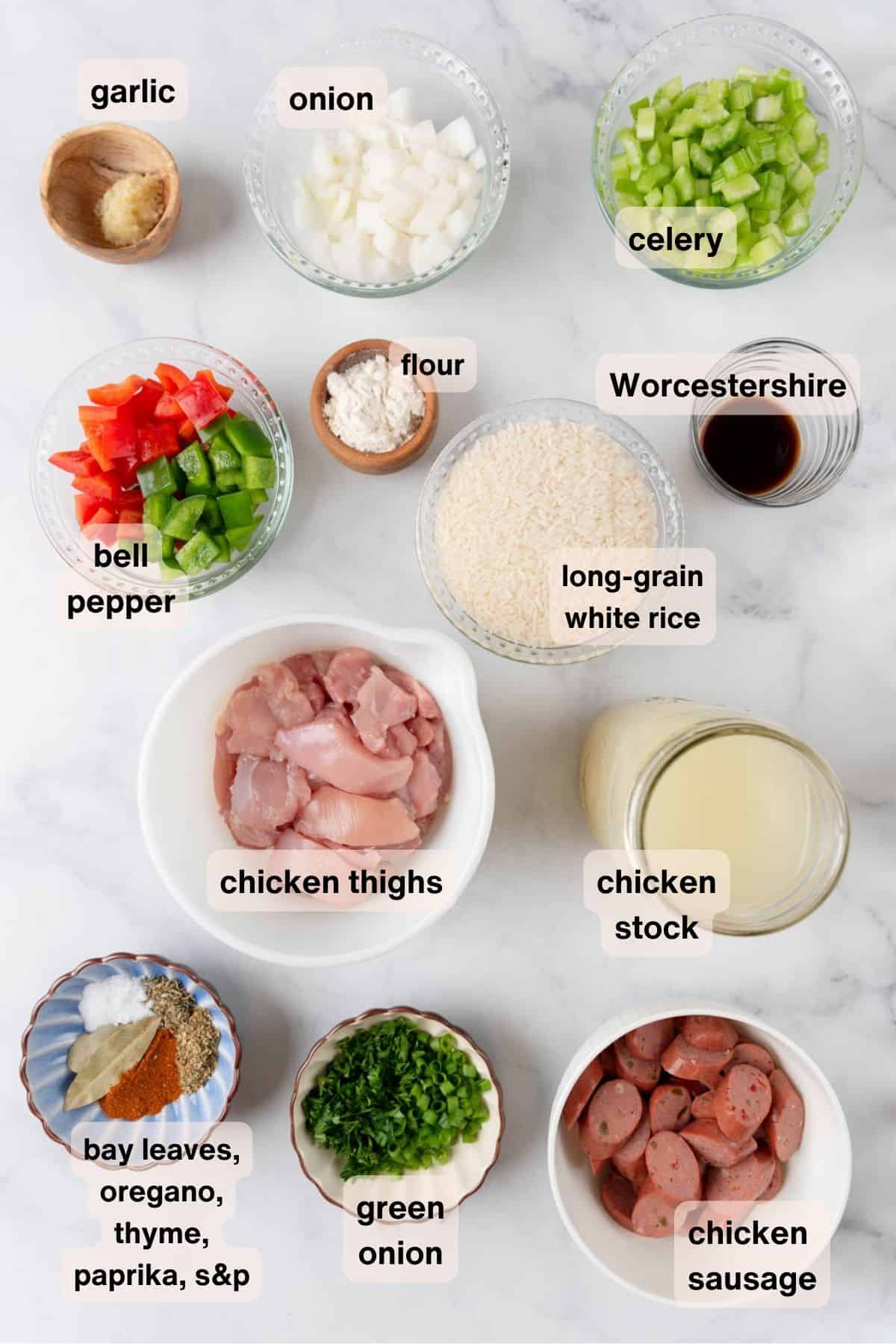
Ingredient Highlights
- Chicken Thighs: Boneless, skinless chicken thighs are my first choice here. They're flavorful, stay tender during the simmering process, and are much more forgiving than chicken breast. Cut the chicken into roughly 1-inch pieces so it browns evenly and distributes throughout the finished rice.
- Chicken Sausage: Chicken sausage is one of the ingredients doing serious heavy lifting in this recipe. I prefer chicken andouille sausage because the smoky, savory seasoning adds a lot of flavor without using pork. If you're specifically making dirty rice without pork, read the sausage label carefully. Chicken sausage isn't automatically pork-free, and formulations vary between brands.
- Jasime Rice: I prefer jasmine rice for this recipe, although other long-grain white rice will work. Rinse the rice before cooking to remove excess surface starch. This helps the grains stay fluffy rather than becoming sticky or gummy.
- The Holy Trinity: Onion, celery, and bell pepper form the classic aromatic foundation of many Cajun and Creole dishes. Don't rush this step. Let the vegetables soften and begin developing a little color before moving on. They're building the flavor base for the entire pot.
- Garlic: Fresh garlic goes in after the vegetables have softened so it has time to become fragrant without burning.
- All-Purpose Flour: A small amount of flour helps lightly thicken the cooking liquid and gives the finished dish a cohesive texture. For a gluten-free version, substitute a 1:1 gluten-free flour blend or white rice flour.
- Chicken Stock: The rice absorbs the cooking liquid, so the chicken stock matters. Use a good-quality stock with plenty of flavor. Before the rice goes in, taste the cooking liquid. It should taste well seasoned because the rice will absorb and mellow those flavors as it cooks.
- Paprika: Paprika contributes color, mild sweetness, and earthy flavor. It also helps give the rice its characteristic darker appearance.
- Thyme, Oregano & Bay Leaves: These dried herbs provide earthy, savory notes that complement the chicken, sausage, and vegetables.
- Worcestershire Sauce: This is one of those small ingredients that makes a noticeable difference. Worcestershire sauce adds umami and a little acidity that rounds out the savory flavors.
- Cayenne Pepper: The cayenne is completely adjustable. Use ¼ teaspoon for gentle heat, up to ½ teaspoon for more noticeable heat, or leave it out entirely for a milder version.
See the recipe card below for quantities.
Step-by-Step Instructions
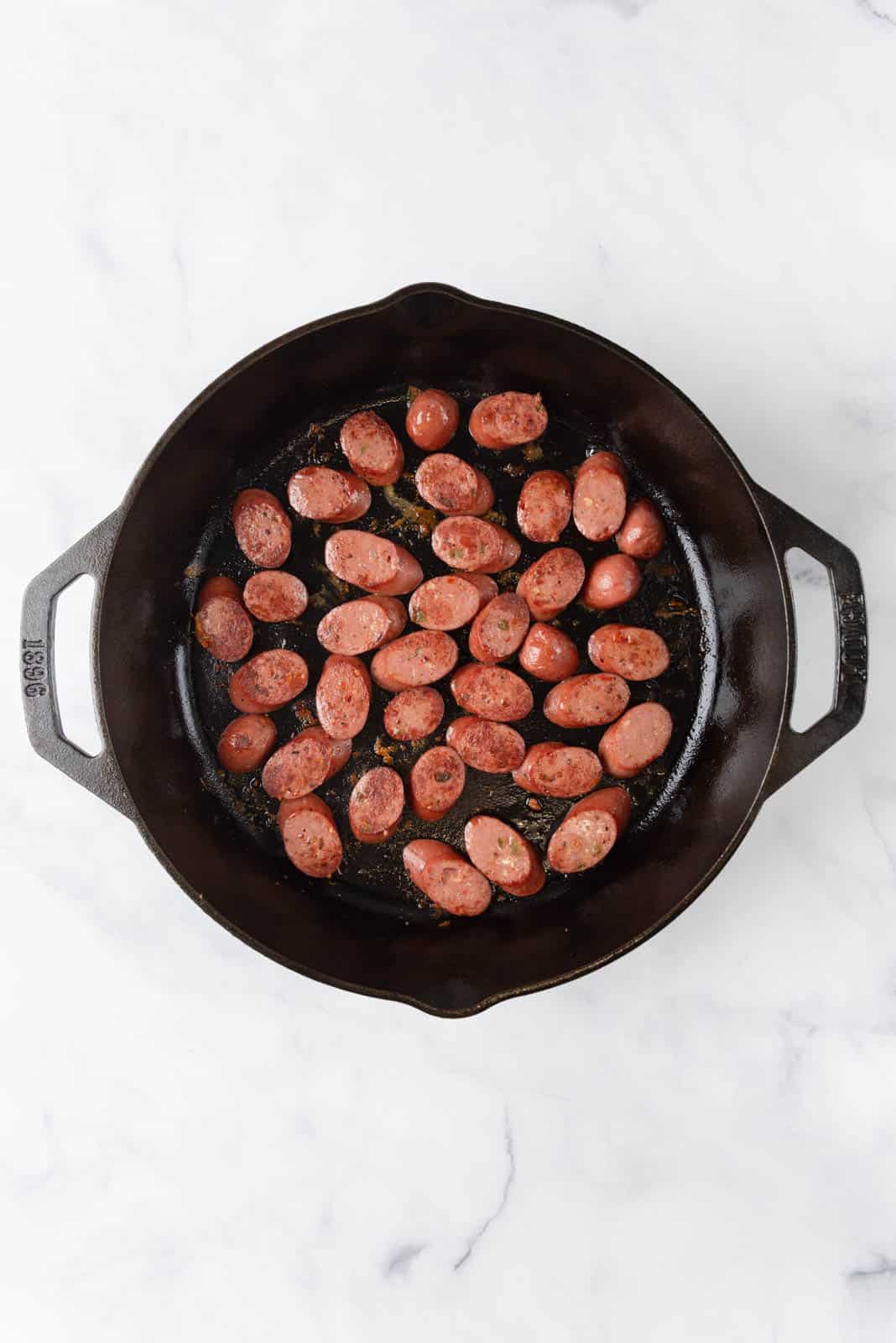
- Step 1: Brown the Chicken Sausage: Heat a large Dutch oven or deep skillet over medium-high heat. Add the chicken sausage and cook until browned on both sides, about 5-6 minutes. Transfer the sausage to a plate. Don't clean the pan. Those browned bits left behind are exactly what you want.
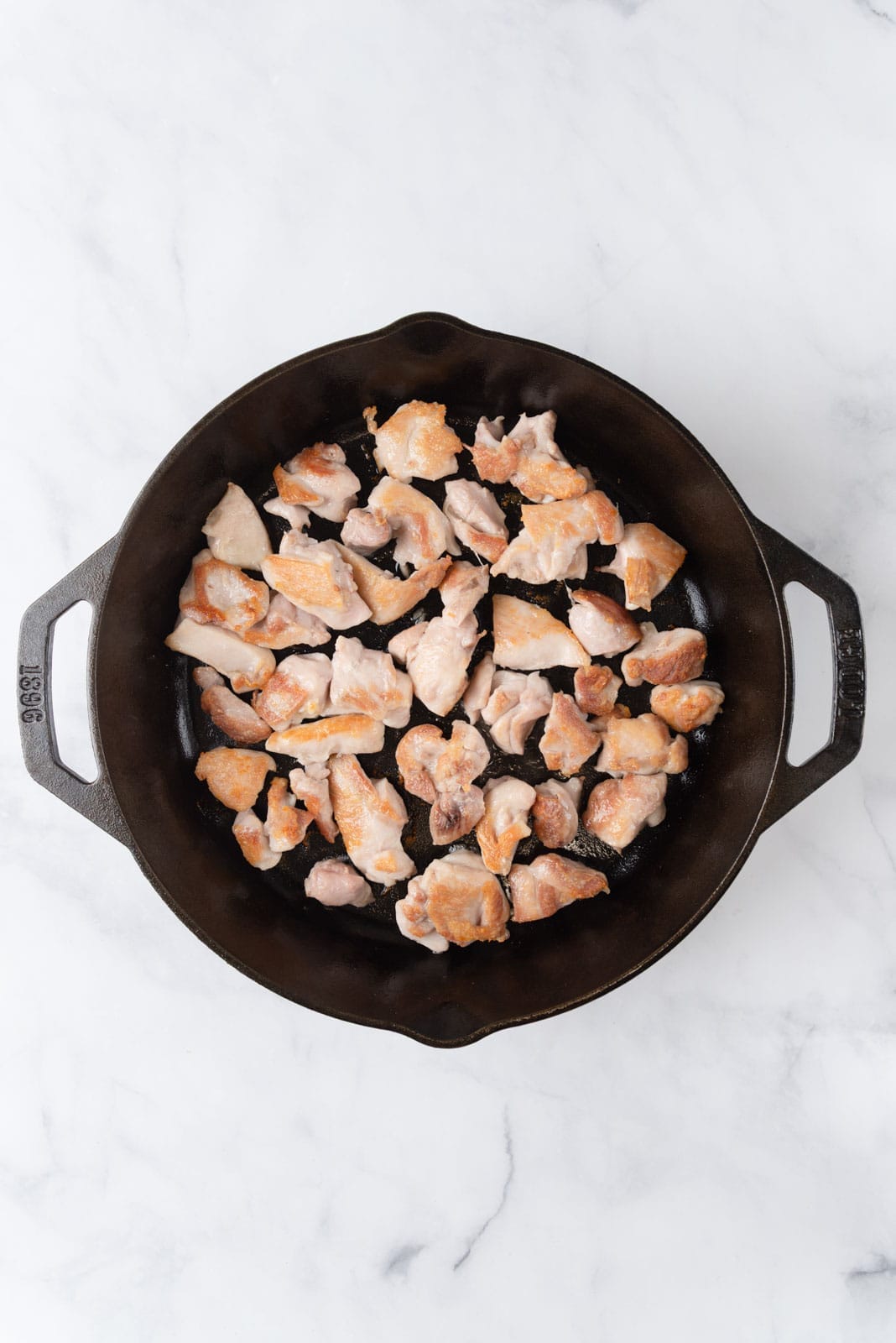
- Step 2: Sear the Chicken: Add avocado or olive oil to the pan. Pat the chicken pieces dry with paper towels, then season with salt and black pepper. Add the chicken to the hot pan in a single layer. Work in batches if necessary so you don't crowd the pan. Cook until browned, about 5-6 minutes. The chicken does not need to be completely cooked through yet. Transfer it to the plate with the sausage. Why sear instead of simply simmering the chicken? Browning develops deeper savory flavors, and the browned bits left in the pan become part of the cooking liquid.
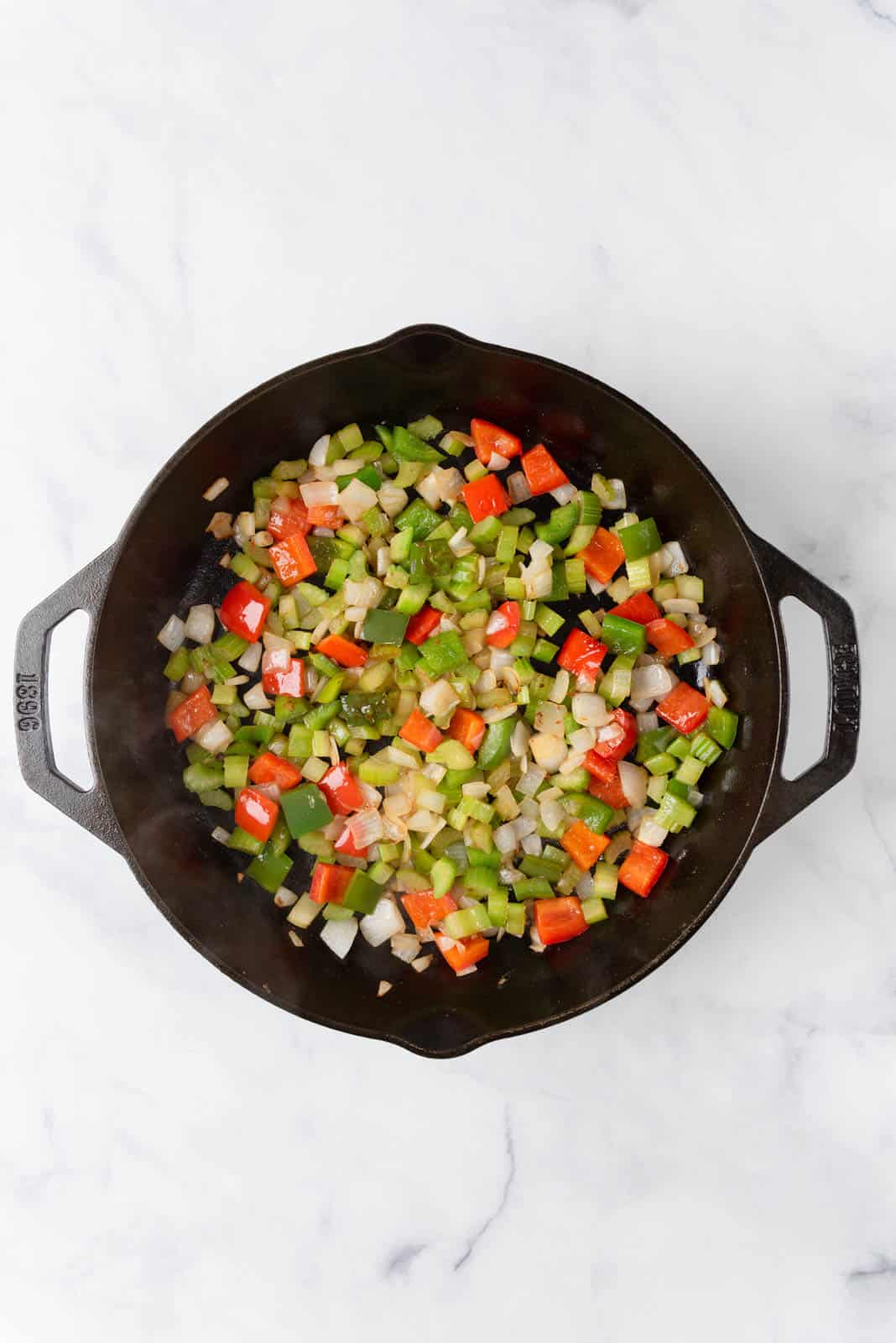
- Step 3: Cook the Holy Trinity: Reduce the heat to medium. Add the onion, bell pepper, and celery. Cook for 6-8 minutes, stirring occasionally, until the vegetables are softened and beginning to turn golden around the edges. Add the garlic and cook for about 30 seconds, until fragrant.
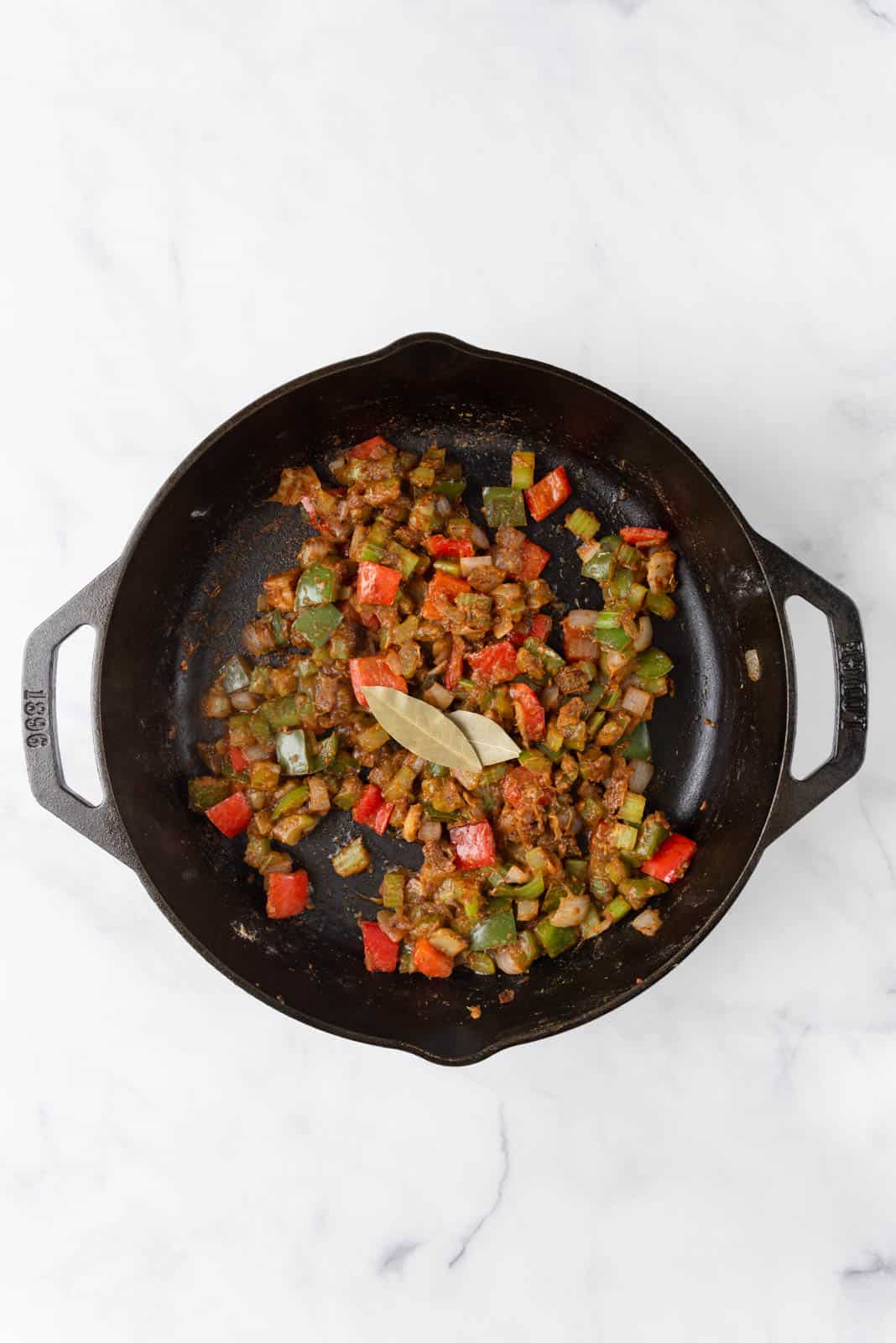
- Step 4: Build the Flavor Base: Sprinkle the flour over the vegetables and stir well. Cook for about 1 minute to remove the raw flour flavor. Add the paprika, thyme, oregano, cayenne, bay leaves, and Worcestershire sauce. Stir everything together. The vegetable mixture will look thick at this point. That's exactly what you want.
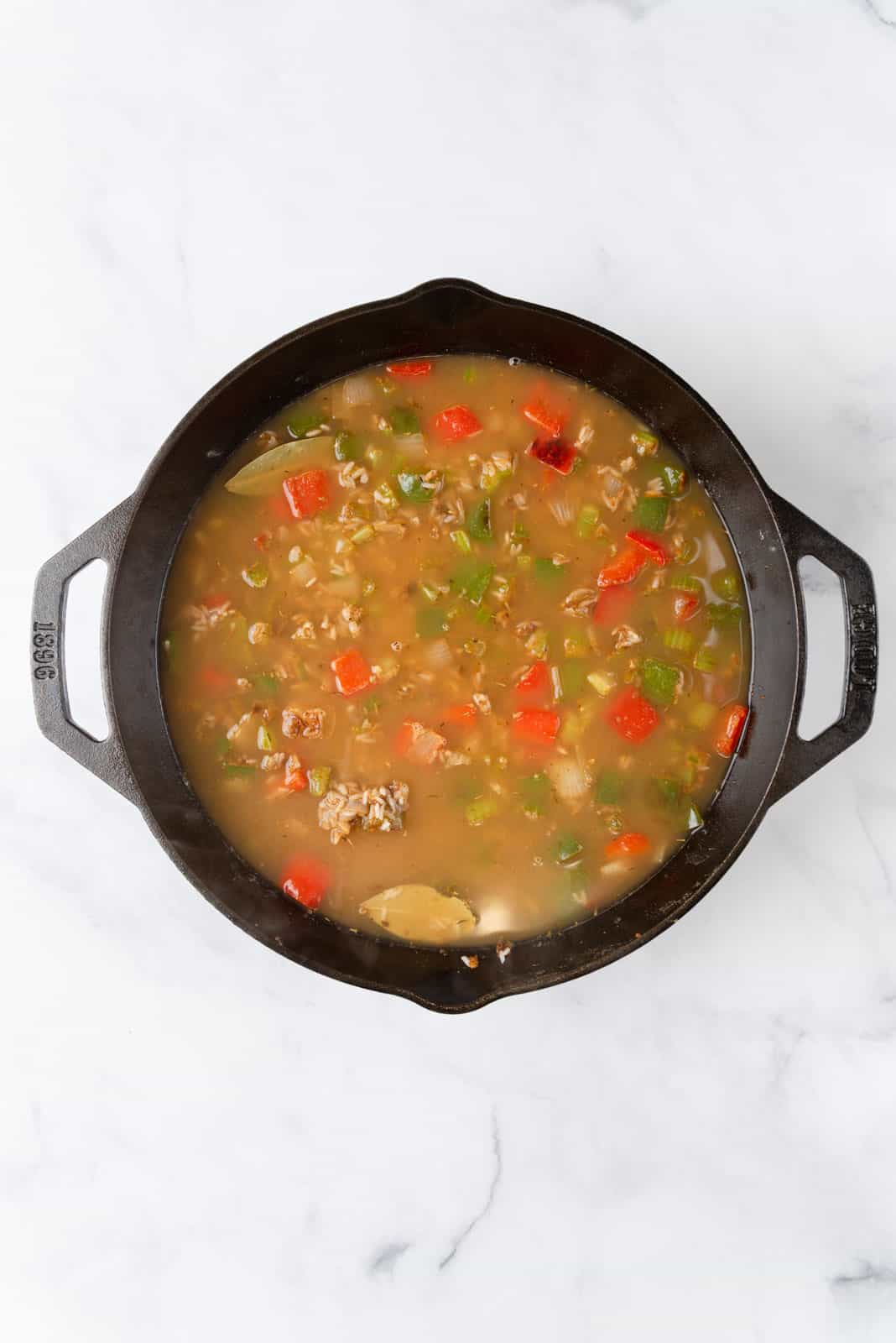
- Step 5: Add the Rice and Stock, then Simmer: Rinse rice in a strainer under cold water until the water runs clear. Stir in the rinsed rice and cook for about 1 minute. This brief step coats the rice in the seasoned vegetable mixture before the liquid goes in. Pour in the chicken stock, scraping the bottom of the pan with a wooden spoon to loosen the browned bits. Return the chicken and sausage to the pan. The rice should be submerged in the cooking liquid. Taste the liquid before covering the pan and adjust the seasoning if needed. Bring everything to a gentle boil, then reduce the heat to low. Cover the pan tightly and simmer for 20-22 minutes, or until the rice is tender and the liquid has been absorbed. Don't lift the lid while the rice cooks. I know. You want to peek. Don't. The trapped steam is helping the rice cook evenly, and repeatedly removing the lid lets that steam escape. If the rice is nearly cooked but the pan looks dry, add a splash of warm chicken stock or water, cover, and continue cooking.
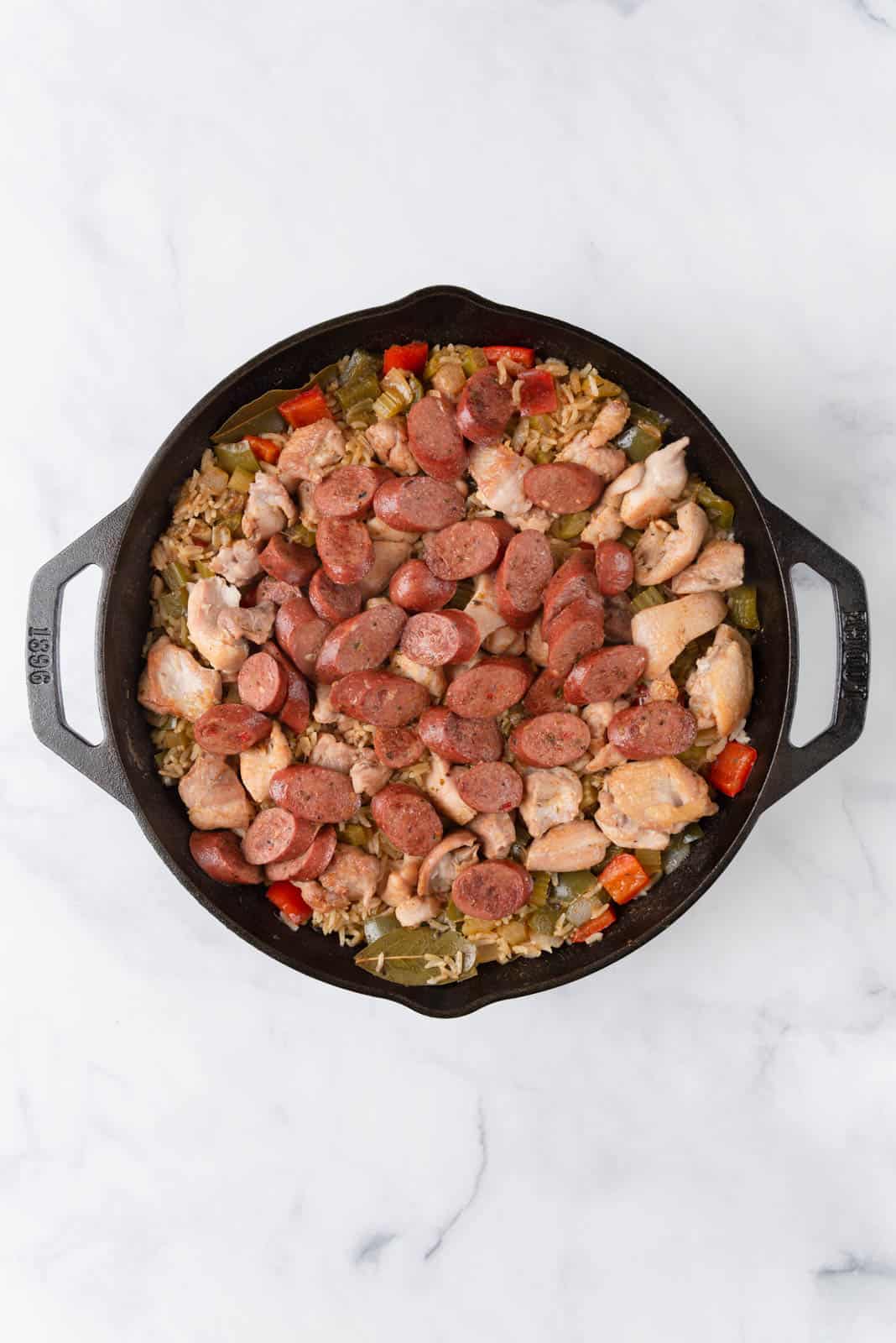
- Step 6: Rest the Rice: Remove the pan from the heat and let it sit, covered, for 5 minutes. This allows the rice to finish steaming and gives the moisture time to redistribute. Remove the bay leaves and fluff the rice gently with a fork.
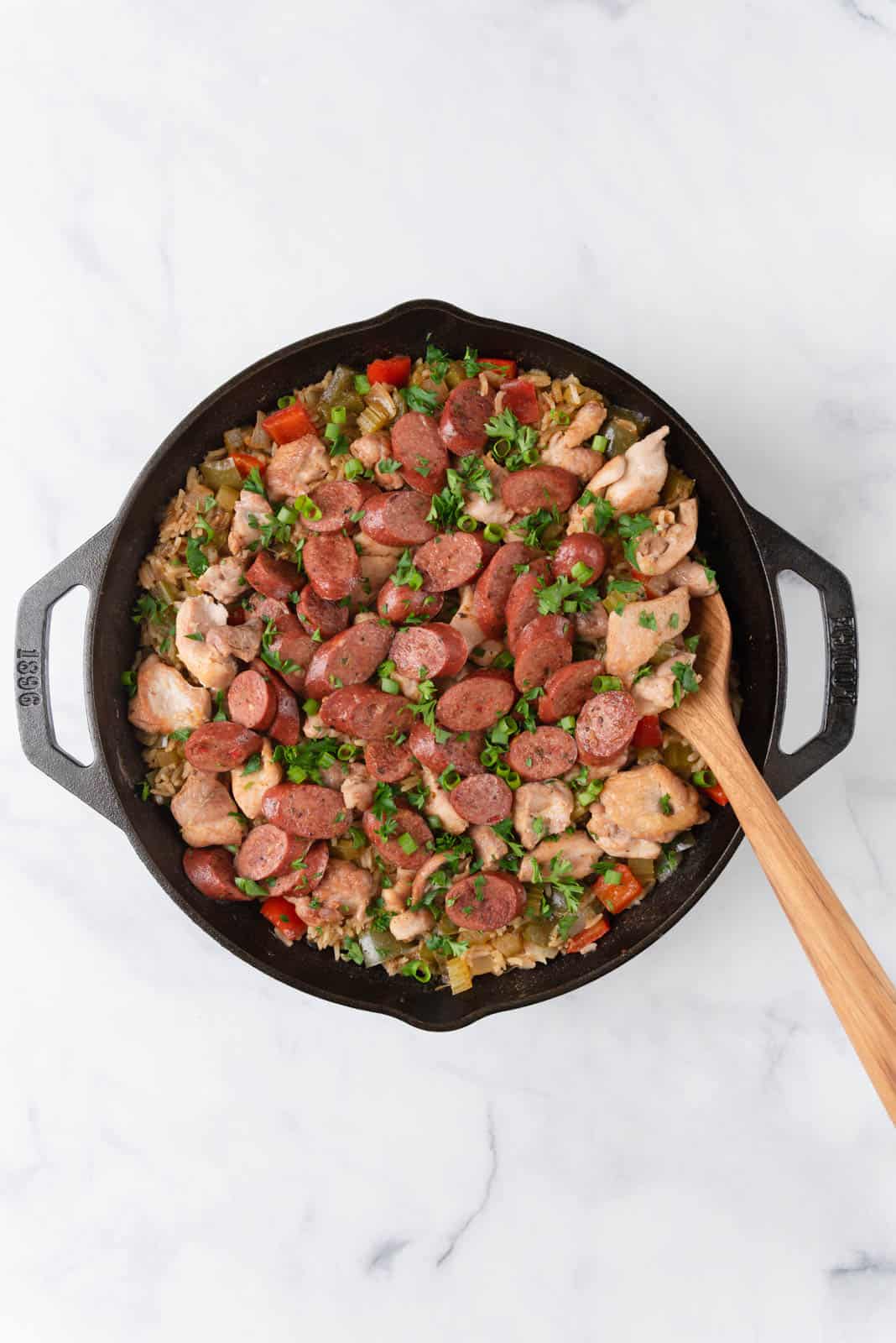
- Step 7: Garnish and Serve: Top with green onions and fresh parsley. Serve with hot sauce for anyone who wants extra heat.
Tips for perfect Chicken Dirty Rice
- Rinse the Rice: Run the rice under cold water until the water runs mostly clear. Removing excess surface starch helps keep the grains from becoming gummy.
- Dry the Chicken Before Searing: Pat the chicken dry before seasoning it. A dry surface browns much better than a wet one. If the chicken is wet, it will release moisture into the pan and steam instead of developing a good sear.
- Don't Crowd the Pan: If the chicken is packed tightly into the skillet, it will steam rather than brown. Cook it in batches if necessary. It takes a few extra minutes but gives you much better flavor.
- Brown the Sausage: Don't just heat the sausage through. Let it develop some color. That browning contributes another layer of flavor to the finished rice.
- Let the Vegetables Develop Color: The onion, celery, and bell pepper don't need to be deeply browned, but they should be soft and beginning to turn golden around the edges. If they still look raw and crunchy, they're not ready.
- Taste the Cooking Liquid: Before the rice absorbs everything, taste the broth. It should taste bold and savory. If it tastes bland at this stage, the finished rice will be bland too.
- Don't Stir the Rice While It Cooks: Once the rice is simmering, leave it alone. Too much stirring releases starch and can make the finished rice sticky.
- Use a Wide, Deep Pan: A large Dutch oven or deep skillet gives the rice room to cook evenly. A pan that's too small can lead to uneven cooking or scorching.
What I learned testing this recipe
I developed this recipe around a pretty specific goal: I wanted the savory, deeply seasoned character of dirty rice without using pork or chicken liver.
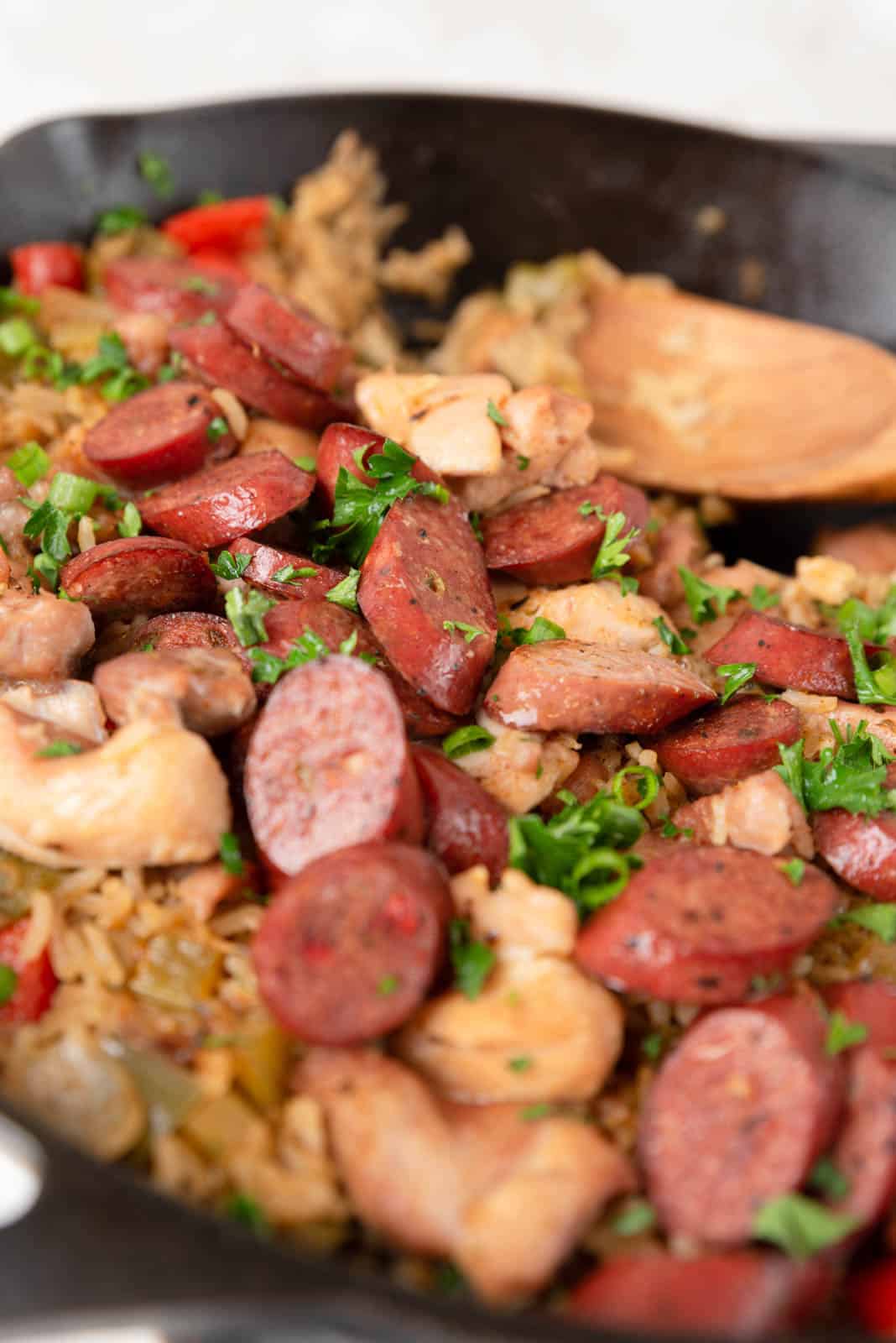
The biggest success was using chicken two ways. Chicken thighs give the dish tender pieces of meat, while chicken sausage contributes the smoky, seasoned flavor that helps the rice taste much more complex than a pot of plain chicken and rice.
I also found that the rice deserves more attention than it might seem.
Rinsing the rice matters. Removing excess surface starch helps keep the grains from becoming gummy.
Browning the meat matters. You want actual color on the chicken and sausage, not just cooked meat. Those browned bits left in the bottom of the pan are valuable flavor.
The pan matters. A wide, deep skillet (like my trusty cast iron skillet) or Dutch oven gives the rice room to cook evenly. A crowded or narrow pan can leave you with unevenly cooked rice or a scorched bottom.
The lid matters. Once the rice starts cooking, resist the urge to keep checking it. The trapped steam is doing important work.
And finally, let the finished rice rest for five minutes. That little bit of patience gives the rice time to finish steaming and helps the texture settle.
These aren't complicated techniques, but together they make a noticeable difference in the finished dish.
What can go wrong with Chicken Dirty Rice?
- The Rice Turns Mushy: Too much liquid, overcooking, or excessive stirring can all lead to mushy rice. Use the amount of stock called for, keep the lid on while the rice cooks, and resist stirring once the rice is simmering.
- The Rice Is Still Crunchy: If the rice is still firm after the cooking time, don't panic. Add about ¼ cup warm chicken stock or water, cover the pan, and continue cooking over low heat for several more minutes. Every stovetop and pan behaves a little differently, so the exact cooking time can vary.
- The Bottom of the Pan Starts to Scorch: Your heat is probably too high. Rice needs a gentle simmer rather than an aggressive boil. Reduce the heat and make sure there is enough liquid in the pan.
- The Chicken Isn't Browning: The chicken is probably too wet, or the pan is too crowded. Pat the chicken dry before cooking and work in batches if necessary.
- The Finished Rice Tastes Bland: Taste the cooking liquid before adding the rice. This is your last easy opportunity to adjust the seasoning before the rice absorbs the liquid. It should taste well seasoned and savory.
Substitutions & Variations
- Chicken Thighs → Chicken Breast: Chicken breast can be substituted for the thighs. Cut it into 1-inch pieces and take care not to overcook it, since breast meat is less forgiving than thighs.
- Chicken Sausage → Turkey Sausage: Turkey sausage is a reasonable substitute if you prefer it. If you're not avoiding pork, traditional pork andouille can also be used, although it obviously changes the recipe from a pork-free version.
- Bell Pepper: Green bell pepper gives the dish a more traditional flavor, but red, yellow, or orange bell peppers will work if you prefer a sweeter, milder flavor.
- Adjust the Heat: For mild dirty rice, omit the cayenne. For more heat, use the full ½ teaspoon or add hot sauce when serving.
- Brown Rice: Brown rice isn't a simple 1:1 substitution here. It requires additional liquid and a longer cooking time, so the cooking method needs to be adjusted. For the recipe exactly as written, I recommend long-grain white rice or jasmine rice.
- Other Variations: Diced mushrooms can add another layer of savory flavor. Diced tomatoes will take the dish in a more Creole-inspired direction. These aren't substitutions I recommend making if you want the recipe exactly as written, but they're easy ways to take the dish in a different direction.
Dietary Variations
- Gluten-Free Chicken Dirty Rice:
- Replace the all-purpose flour with a 1:1 gluten-free flour blend or white rice flour.
- Use gluten-free Worcestershire sauce.
- Check the chicken sausage label carefully for gluten-containing ingredients.
- The rice, chicken, vegetables, herbs, and spices are naturally gluten-free, but prepared sausage and Worcestershire sauce can vary by brand.
- Dairy-Free: This recipe is naturally dairy-free as written.
- Lower Sodium: Use low-sodium chicken stock and a lower-sodium chicken sausage. Because sausage and chicken stock can contribute significant salt, taste the cooking liquid before adding additional salt and adjust carefully.
Equipment Needed
- Large Dutch oven or deep skillet with lid
- A 12-inch deep skillet or 5-6 quart Dutch oven is ideal. You want enough surface area to brown the meat properly and enough depth to hold the rice and cooking liquid comfortably.
- A tight-fitting lid is important because the rice relies on trapped steam to cook properly.
- Cutting board
- Chef's knife
- Measuring cups and spoons
- Wooden spoon or silicone spatula
Storage Instructions
Refrigeration & reheating
Store leftover chicken dirty rice in an airtight container in the refrigerator for up to 4 days.
To reheat on the stovetop, warm gently over medium-low heat with a splash of chicken stock or water to loosen the rice.
For the microwave, heat individual portions in 1-minute intervals, stirring between intervals. A damp paper towel loosely covering the dish helps prevent the rice from drying out.
Freezing
Allow the rice to cool completely, then transfer it to freezer-safe containers or bags.
Freeze for up to 3 months for the best quality.
Thaw overnight in the refrigerator before reheating.
Chicken Dirty Rice Serving Suggestions
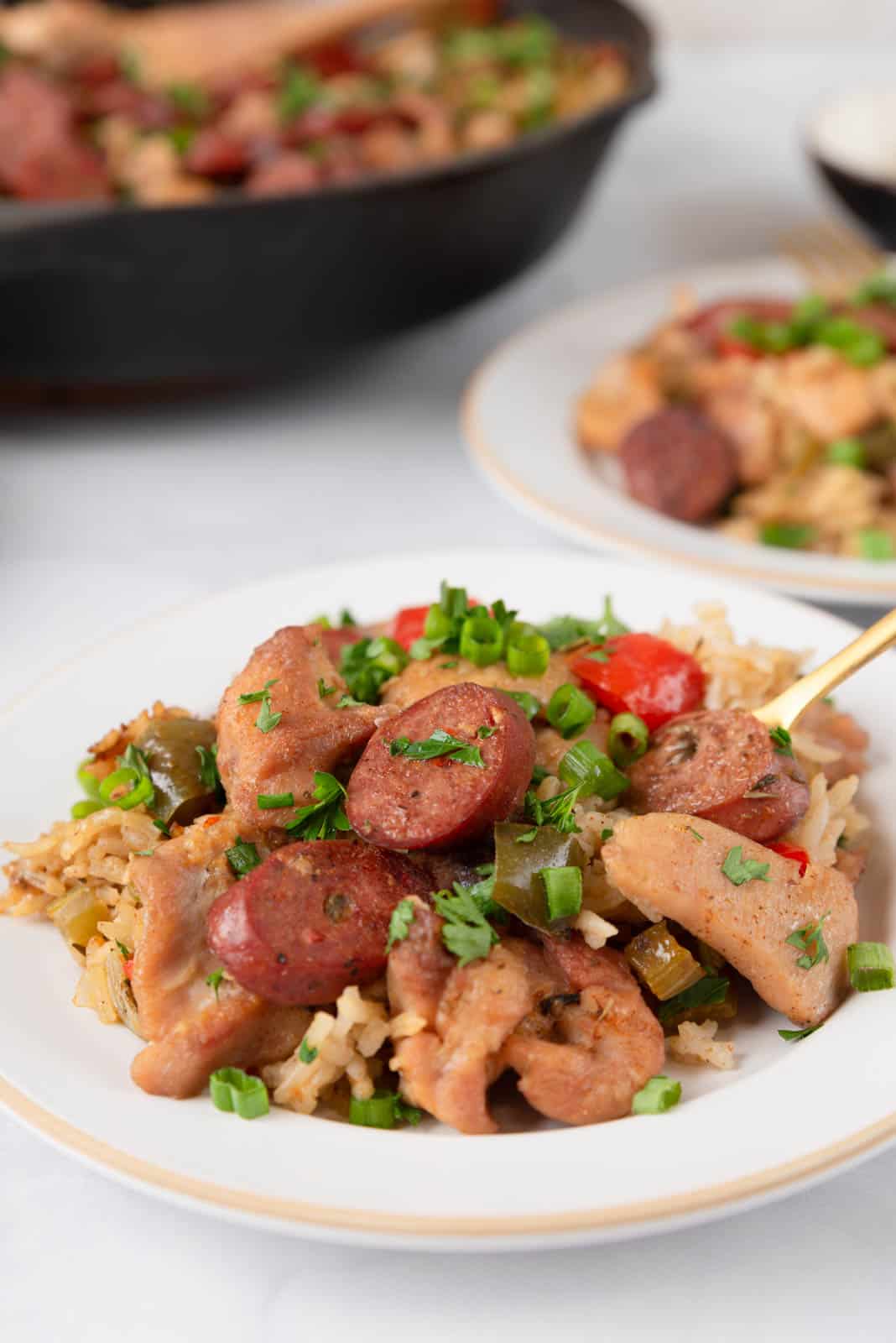
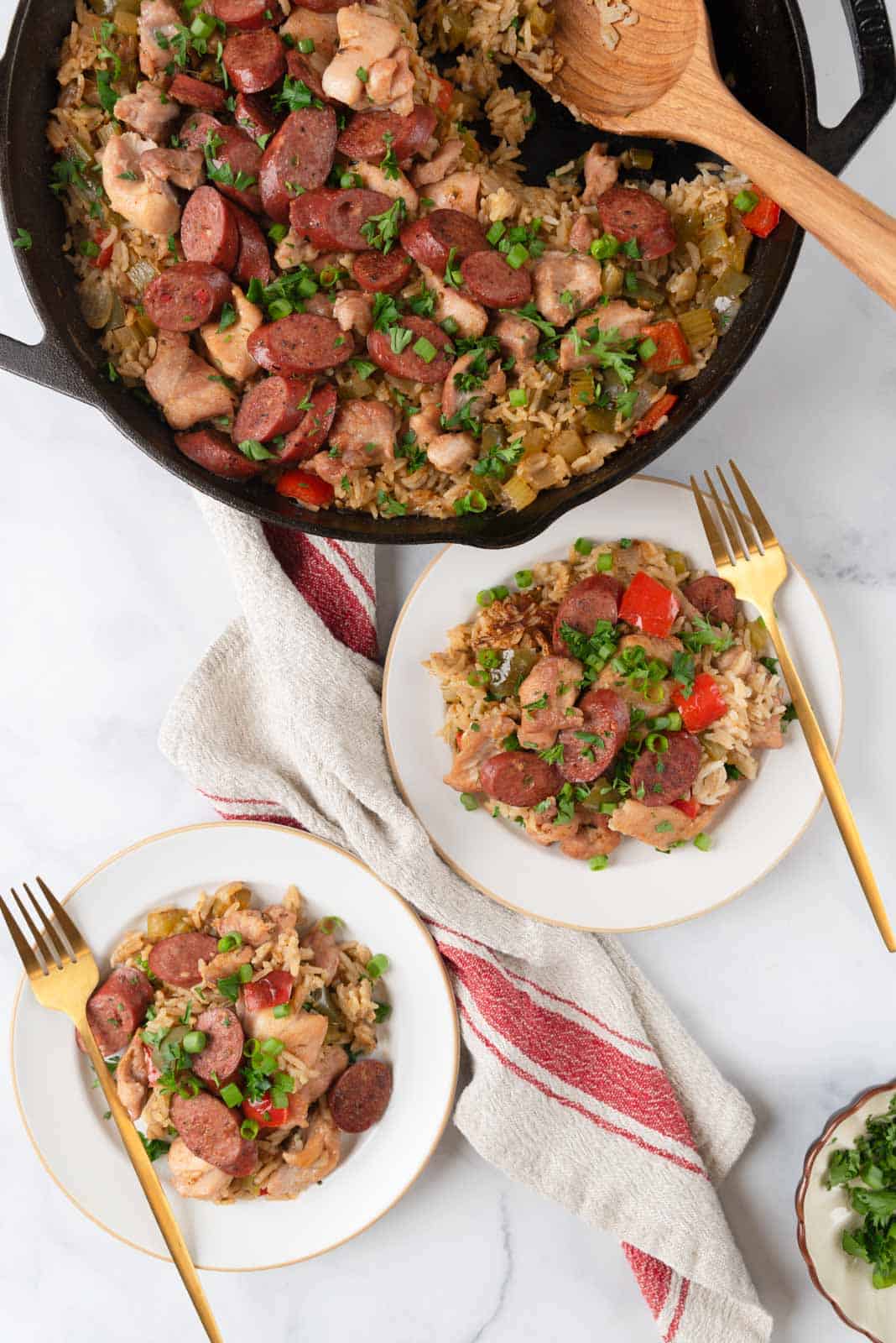
Chicken dirty rice is hearty enough to serve as a complete meal, but I like pairing it with something fresh or green.
- Southern-style cornbread for soaking up the savory juices
- A simple green salad with a light vinaigrette
- Collard greens for a classic Southern-inspired pairing
- Garlic green beans for an easy vegetable side
- Coleslaw for something cool and crunchy
- Hot sauce for anyone who wants to turn up the spice
FAQs: Chicken Dirty Rice Recipe
I don't recommend it. Instant rice cooks too quickly and doesn't absorb the cooking liquid in the same way. Long-grain white or jasmine rice gives you the texture this recipe is designed for.
It has mild heat when made with ¼ teaspoon cayenne. Increase it to ½ teaspoon for more heat or omit it entirely for a milder dish. Hot sauce at the table is another easy way to let everyone customize their serving.
Yes. This is an excellent meal-prep recipe. Cook it completely, cool it, and refrigerate it. Reheat gently with a splash of chicken stock or water.
You can, although I prefer the flavor of freshly browned chicken. If using rotisserie chicken, shred or chop it and add it toward the end of cooking, just long enough to heat it through.
Love This Chicken & Chicken Sausage Dirty Rice Skillet Recipe? Please tag @poppytrailtable on Instagram and Facebook and leave a star rating⭐ ⭐ ⭐ ⭐ ⭐ and review below! Thank you!
Recent Recipes:
Looking for more recipes to enjoy? Try these:
Recipe
Chicken & Chicken Sausage Dirty Rice Skillet | One-Pot Meal
Equipment
- Large Dutch oven or deep skillet with lid *Use a 12-inch deep skillet or 5-6 quart Dutch oven is ideal. You want enough surface area to brown the meat properly and enough depth to hold the rice and cooking liquid comfortably. A tight-fitting lid is important because the rice relies on trapped steam to cook properly.
- Cutting board
- Chef's knife
- Measuring cups and spoons
- Wooden spoon or silicone spatula
Ingredients
- 1 to 1 ½ pounds boneless skinless chicken thighs, cut into 1-inch pieces
- 12 oz to 1 pound chicken sausage andouille preferred
- 1 ½ cups long-grain white rice jasmine preferred
- 3 cups chicken stock
- 1 medium onion diced
- 1 bell pepper diced
- 3 celery stalks diced
- 2 tablespoons all-purpose flour
- 2 bay leaves
- ½ to 1 teaspoon dried oregano
- ½ to 1 teaspoon dried thyme
- 3 garlic cloves minced
- 1 ½ to 2 teaspoons salt
- ½ teaspoon black pepper
- 2 teaspoons paprika
- 1 tablespoon Worcestershire
- 2 tablespoons avocado oil
- ¼ to ½ teaspoon cayenne pepper adjust to your heat preference or omit
- *optional garnishes: green onion, fresh chopped parsley, hot sauce
Instructions
- Step 1: Brown the Chicken Sausage: Heat a large Dutch oven or deep skillet over medium-high heat. Add the chicken sausage and cook until browned on both sides, about 5-6 minutes. Transfer the sausage to a plate. Don't clean the pan. Those browned bits left behind are exactly what you want.
- Step 2: Sear the Chicken: Add avocado or olive oil to the pan. Pat the chicken pieces dry with paper towels, then season with salt and black pepper. Add the chicken to the hot pan in a single layer. Work in batches if necessary so you don't crowd the pan. Cook until browned, about 5-6 minutes. The chicken does not need to be completely cooked through yet. Transfer it to the plate with the sausage. Why sear instead of simply simmering the chicken? Browning develops deeper savory flavors, and the browned bits left in the pan become part of the cooking liquid.
- Step 3: Cook the Holy Trinity: Reduce the heat to medium. Add the onion, bell pepper, and celery. Cook for 6-8 minutes, stirring occasionally, until the vegetables are softened and beginning to turn golden around the edges. Add the garlic and cook for about 30 seconds, until fragrant.
- Step 4: Build the Flavor Base: Sprinkle the flour over the vegetables and stir well. Cook for about 1 minute to remove the raw flour flavor. Add the paprika, thyme, oregano, cayenne, bay leaves, and Worcestershire sauce. Stir everything together. The vegetable mixture will look thick at this point. That's exactly what you want.
- Step 5: Add the Rice and Stock, then Simmer: Rinse rice in a strainer under cold water until the water runs clear. Stir in the rinsed rice and cook for about 1 minute. This brief step coats the rice in the seasoned vegetable mixture before the liquid goes in. Pour in the chicken stock, scraping the bottom of the pan with a wooden spoon to loosen the browned bits. Return the chicken and sausage to the pan. The rice should be submerged in the cooking liquid. Taste the liquid before covering the pan and adjust the seasoning if needed. Bring everything to a gentle boil, then reduce the heat to low. Cover the pan tightly and simmer for 20-22 minutes, or until the rice is tender and the liquid has been absorbed. Don't lift the lid while the rice cooks. I know. You want to peek. Don't. The trapped steam is helping the rice cook evenly, and repeatedly removing the lid lets that steam escape. If the rice is nearly cooked but the pan looks dry, add a splash of warm chicken stock or water, cover, and continue cooking.
- Step 6: Rest the Rice: Remove the pan from the heat and let it sit, covered, for 5 minutes. This allows the rice to finish steaming and gives the moisture time to redistribute. Remove the bay leaves and fluff the rice gently with a fork.
- Step 7: Garnish and Serve: Top with green onions and fresh parsley. Serve with hot sauce for anyone who wants extra heat.
Notes
Tips for perfect Chicken Dirty Rice
- Rinse the Rice: Run the rice under cold water until the water runs mostly clear. Removing excess surface starch helps keep the grains from becoming gummy.
- Dry the Chicken Before Searing: Pat the chicken dry before seasoning it. A dry surface browns much better than a wet one. If the chicken is wet, it will release moisture into the pan and steam instead of developing a good sear.
- Don't Crowd the Pan: If the chicken is packed tightly into the skillet, it will steam rather than brown. Cook it in batches if necessary. It takes a few extra minutes but gives you much better flavor.
- Brown the Sausage: Don't just heat the sausage through. Let it develop some color. That browning contributes another layer of flavor to the finished rice.
- Let the Vegetables Develop Color: The onion, celery, and bell pepper don't need to be deeply browned, but they should be soft and beginning to turn golden around the edges. If they still look raw and crunchy, they're not ready.
- Taste the Cooking Liquid: Before the rice absorbs everything, taste the broth. It should taste bold and savory. If it tastes bland at this stage, the finished rice will be bland too.
- Don't Stir the Rice While It Cooks: Once the rice is simmering, leave it alone. Too much stirring releases starch and can make the finished rice sticky.
- Use a Wide, Deep Pan: A large Dutch oven or deep skillet gives the rice room to cook evenly. A pan that's too small can lead to uneven cooking or scorching.
Comments
No Comments