
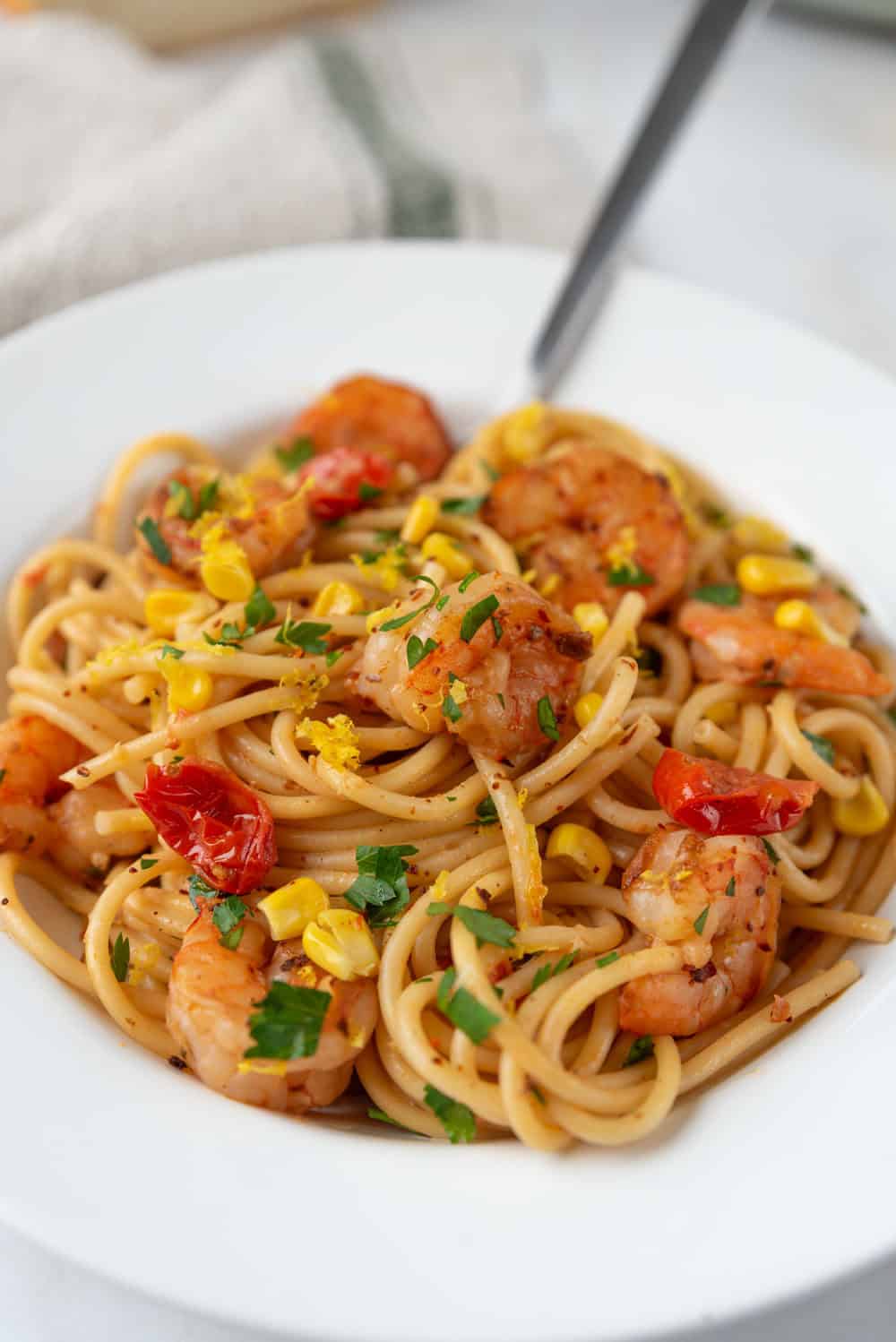
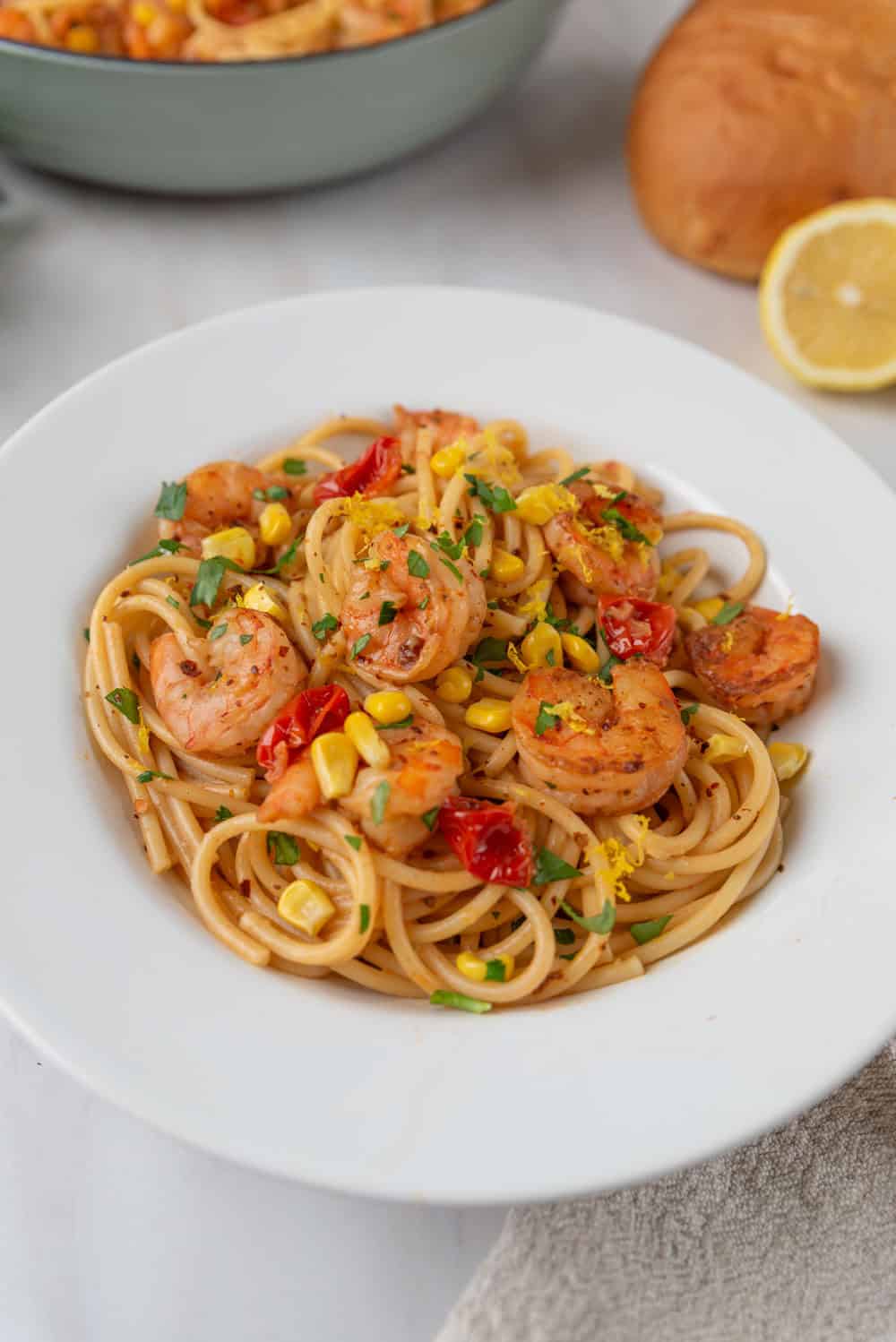
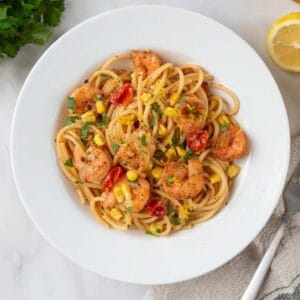
This Old Bay Shrimp Pasta is everything a summer dinner should be: bold, fresh, and full of flavor. Juicy shrimp seasoned generously with Old Bay are tossed with pasta, sweet corn, blistered cherry tomatoes, shallots, garlic, and a white wine butter sauce made rich with shrimp stock and a squeeze of bright lemon.
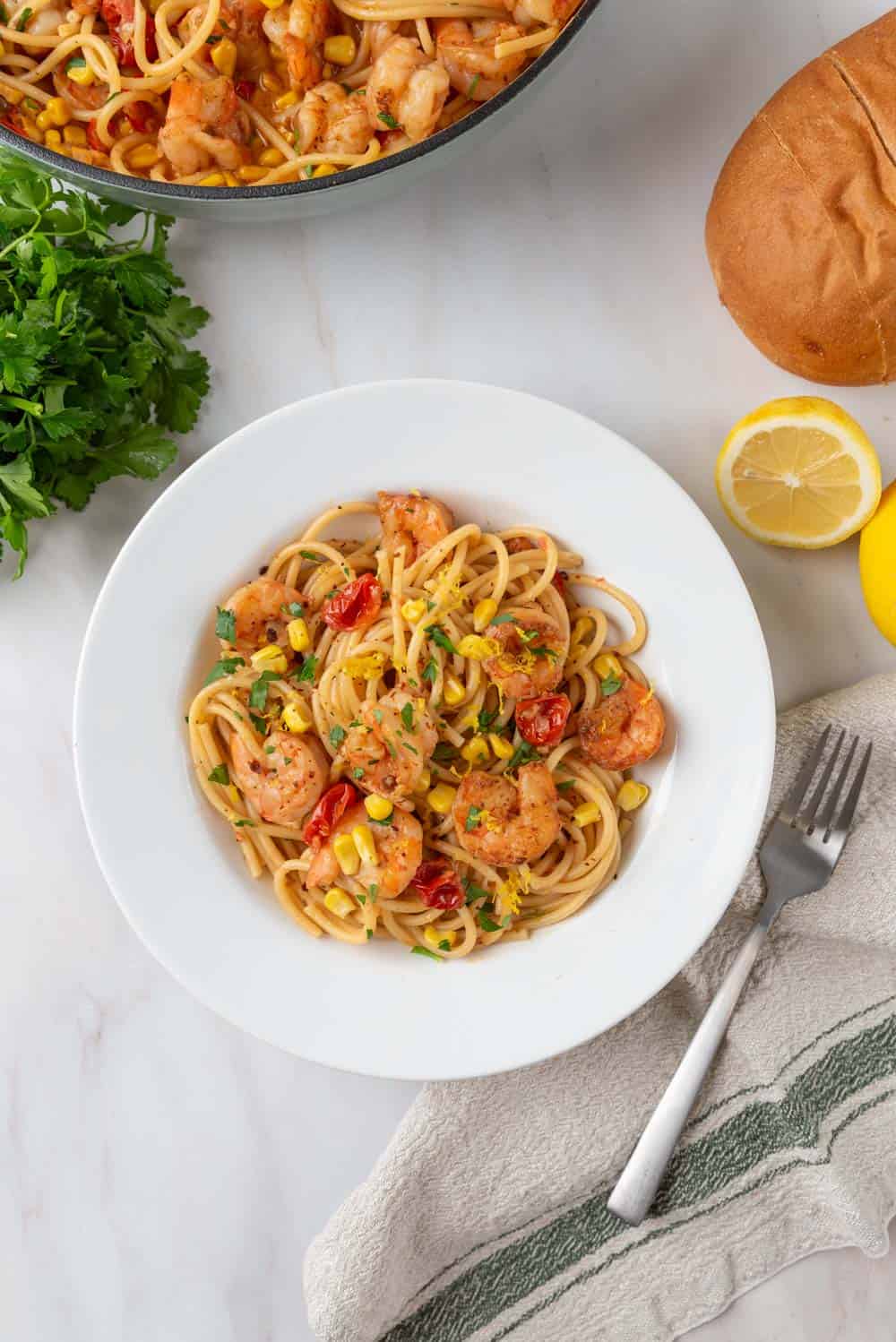
If you've ever spent a summer afternoon delighting in the messy and delicious tradition of a seafood boil, cracking steamed crabs at a picnic table covered in paper, fingers dusted orange with Old Bay, you know exactly the kind of flavor this recipe is chasing. That distinctly American seasoning blend, with its mix of celery salt, paprika, mustard, and a dozen other spices, is one of the most instantly recognizable tastes on the East Coast, and it belongs in far more dishes than just a seafood boil. I love it on chicken, roasted potatoes, corn on the cob...potato chips! Ohmygosh, potato chips seasoned with Old Bay are aaaaaamazing. That said, a seafood boil was exactly what I was in the mood for when I put this dish together the first time. I don't regularly have crab or crawfish in my freezer, but I do usually have a bag of shrimp, and pasta sells my family on a lot of things they might otherwise reject.
The dish is bright without being fussy, rich without being heavy. Add a splash of cream if you want something a little more velvety; skip it for a lighter, sharper sauce. Either way, it's worth keeping this one on your regular dinner list.
Looking for more seafood dinner recipes? Try these: Salmon Patties with Remoulade, Air Fryer Mediterranean Salmon Bowls, Hot Honey Glazed Salmon, One Pan Lemon Garlic Shrimp & Rice, or Shrimp Spring Roll Salad.
Why You'll Love This Quick Pasta Recipe
- It's fast. From shrimp in the pan to pasta on the plate, you're looking at 30 minutes. Start to finish.
- Balanced! Not too heavy, not too light.
- Family-friendly but elevated enough for guests.
- It's delicious with or without cream.
- A great way to use peak summer produce, like corn and tomatoes.
- The sauce is genuinely crave-worthy. The combination of white wine, shrimp stock, butter, and lemon creates a silky, emulsified pan sauce that coats every strand of pasta like it was made for it, because it was!
Ingredient Highlights
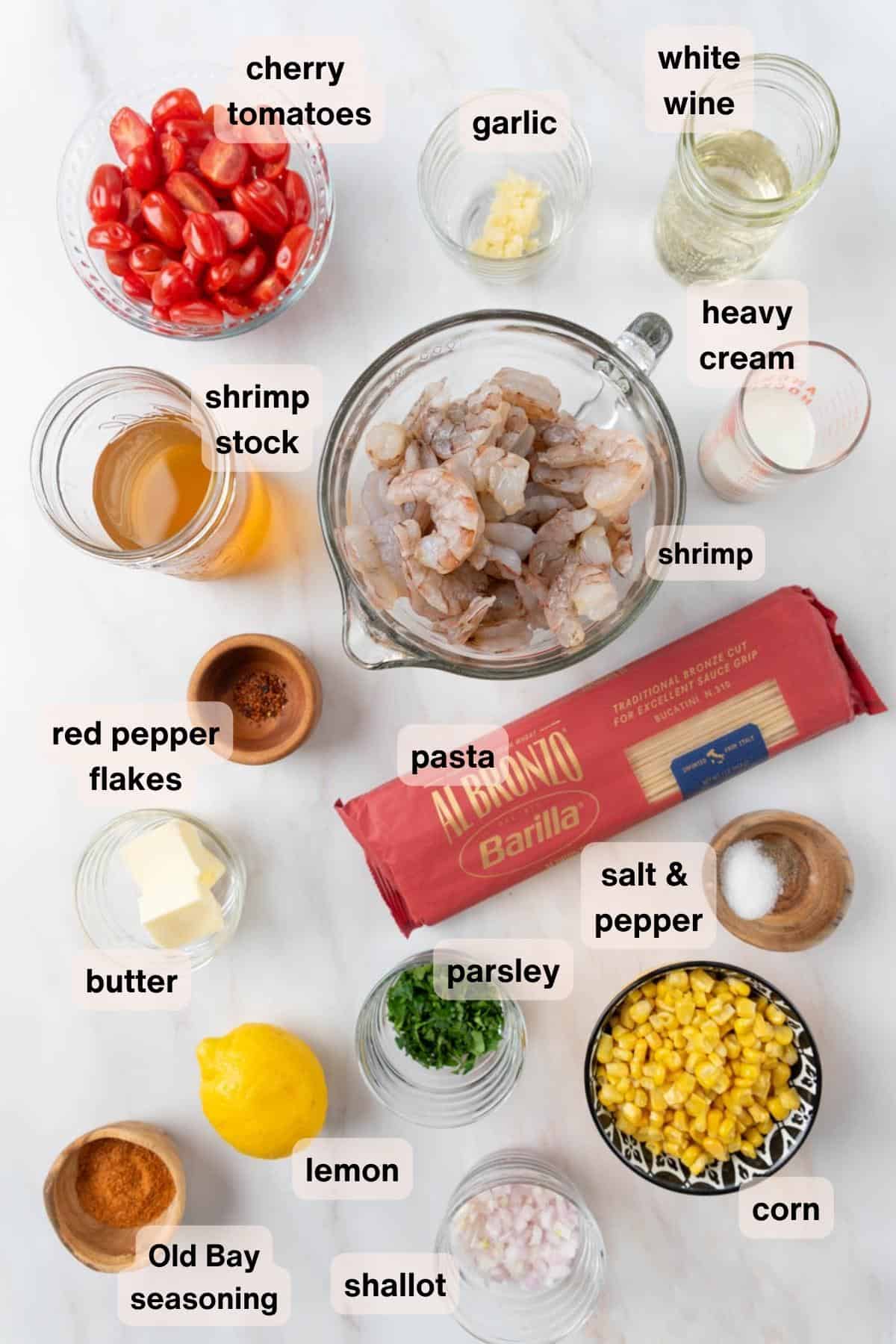
- Shrimp: Large or extra-large shrimp work best here. Look for 16/20 or 21/25 count shrimp (that's the number per pound). If you can find fresh Gulf shrimp or local shrimp, use them. Frozen works perfectly fine, just thaw overnight in the fridge or under cold running water. Peel and devein before cooking, and pat them completely dry so they sear rather than steam. Use the shells and tails for a quick homemade shrimp stock. If you are interested in a buying guide to shop for sustainable shrimp, here's a link.
- Old Bay Seasoning: The seasoning really is the star of this dish. This blend does the heavy lifting on flavor, so use a generous hand when seasoning the shrimp. Old Bay is not generally considered spicy, but if your family prefers no kick at all, use a little less Old Bay.
- Shallot: Milder and slightly sweeter than an onion, shallot is the right aromatic base here. It melts into the sauce without overpowering the seafood. White onions are also great in this recipe.
- Corn: Fresh corn, cut off the cob, is ideal when it's in season. Frozen corn (thawed) is a reliable year-round stand-in.
- Cherry Tomatoes: They burst into the sauce, adding acidity and a subtle sweetness. Any color works!
- White Wine: Creates a light but flavorful base. Choose a dry white wine like Sauvignon Blanc or Pinot Grigio. The wine deglazes the pan and adds brightness to the sauce.
- Lemon: Brightens everything and balances the richness.
- Shrimp Stock: This is the secret weapon. It adds a deep, briny, oceanic flavor that takes the sauce from good to genuinely excellent. Store-bought shrimp stock works, or see the tips section for a quick homemade version using the shrimp shells. You can also substitute with chicken stock, but it won't have as much deep seafood flavor.
- Garlic: Fresh garlic is always best. Thin-slice it if you want it to dissolve more into the sauce; mince it if you want more garlic presence.
- Butter: Unsalted, cold, and cut into cubes. The butter goes in at the end, swirled into the pan off the heat to create a glossy, emulsified sauce. This technique is called monter au beurre; fancy name, simple technique.
- Lemon: Both juice and zest. The juice brightens the sauce; the zest adds a floral, aromatic note that pushes the whole dish into something really special.
- Heavy Cream: Optional, but even a small splash (2-3 tablespoons) transforms the sauce into something a little more velvety and luxurious. I include it in the recipe below as an optional addition; it's delicious either way.
- Parsley: Flat-leaf Italian parsley, freshly chopped, stirred in at the very end. Brings color, freshness, and a clean herbal note that cuts through the richness of the butter.
- Pasta: Bucatini, spaghetti, or linguine are my first choices. Long pasta lets the sauce cling in all the right ways. Rigatoni or penne work well if you prefer short pasta.
See the recipe card below for quantities.
Step-by-Step Instructions for Old Bay Shrimp Pasta
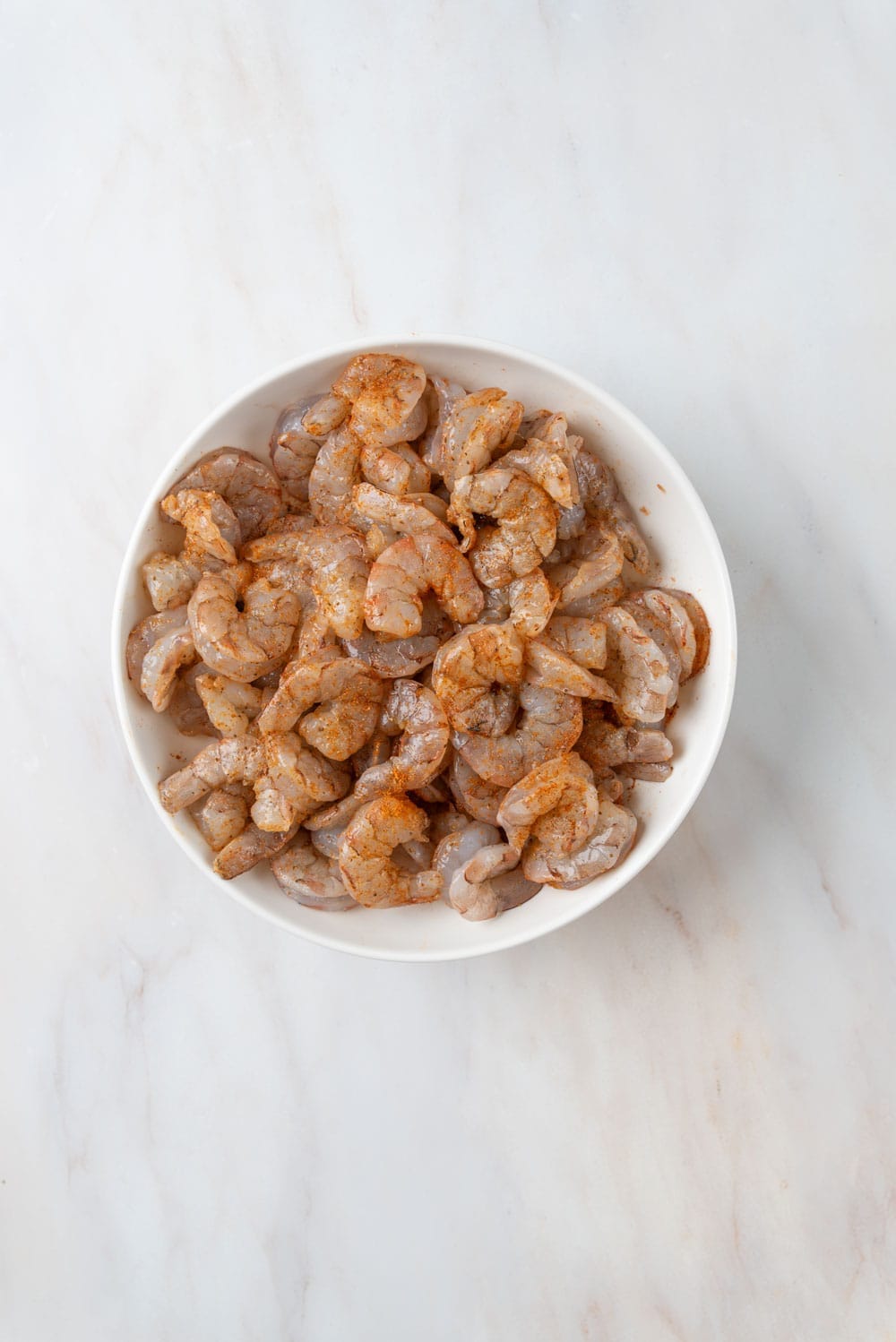
- Step 1: Prep & Season Shrimp & Cook Pasta: Pat 1.5 pounds large shrimp (16/20 or 21/25 count), peeled and deveined, completely dry with paper towels. This is important for a good sear. In a bowl, toss the shrimp with 2 teaspoons Old Bay seasoning and ½ teaspoon kosher salt. Set aside while the pasta cooks. Bring a large pot of heavily salted water to a boil. Cook 12 ounces of pasta according to package directions until just before al dente. Usually, 1 to 2 minutes less than the recommended cooking time on the package. Before draining, reserve about 1 cup of pasta water. You may need it to loosen the sauce. Drain pasta and set aside.
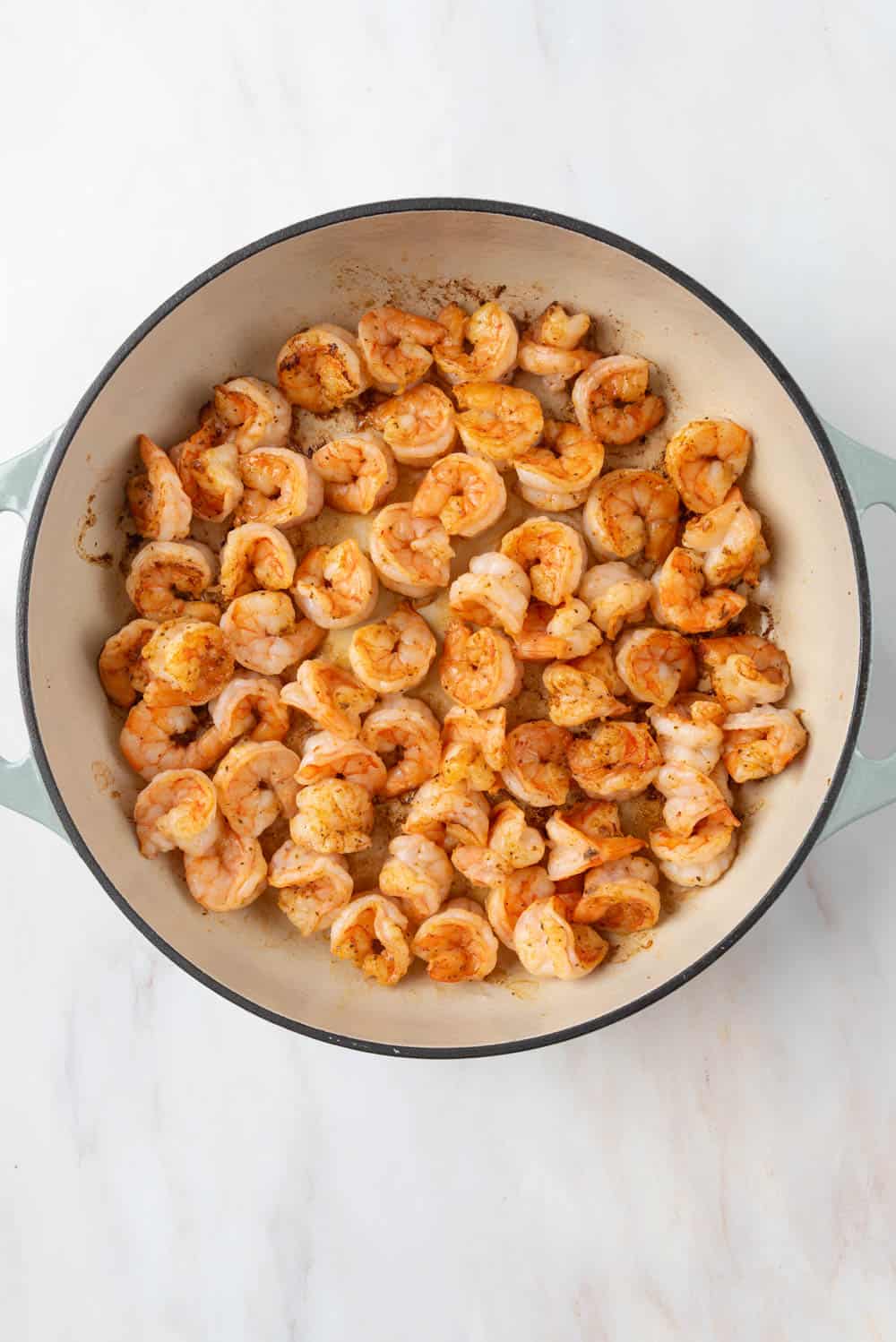
- Step 2: Sear Shrimp: Heat 1 tablespoon olive oil and 1 tablespoon butter in a large skillet over medium-high heat. Add shrimp in a single layer and sear 1-2 minutes per side. Remove and set aside.
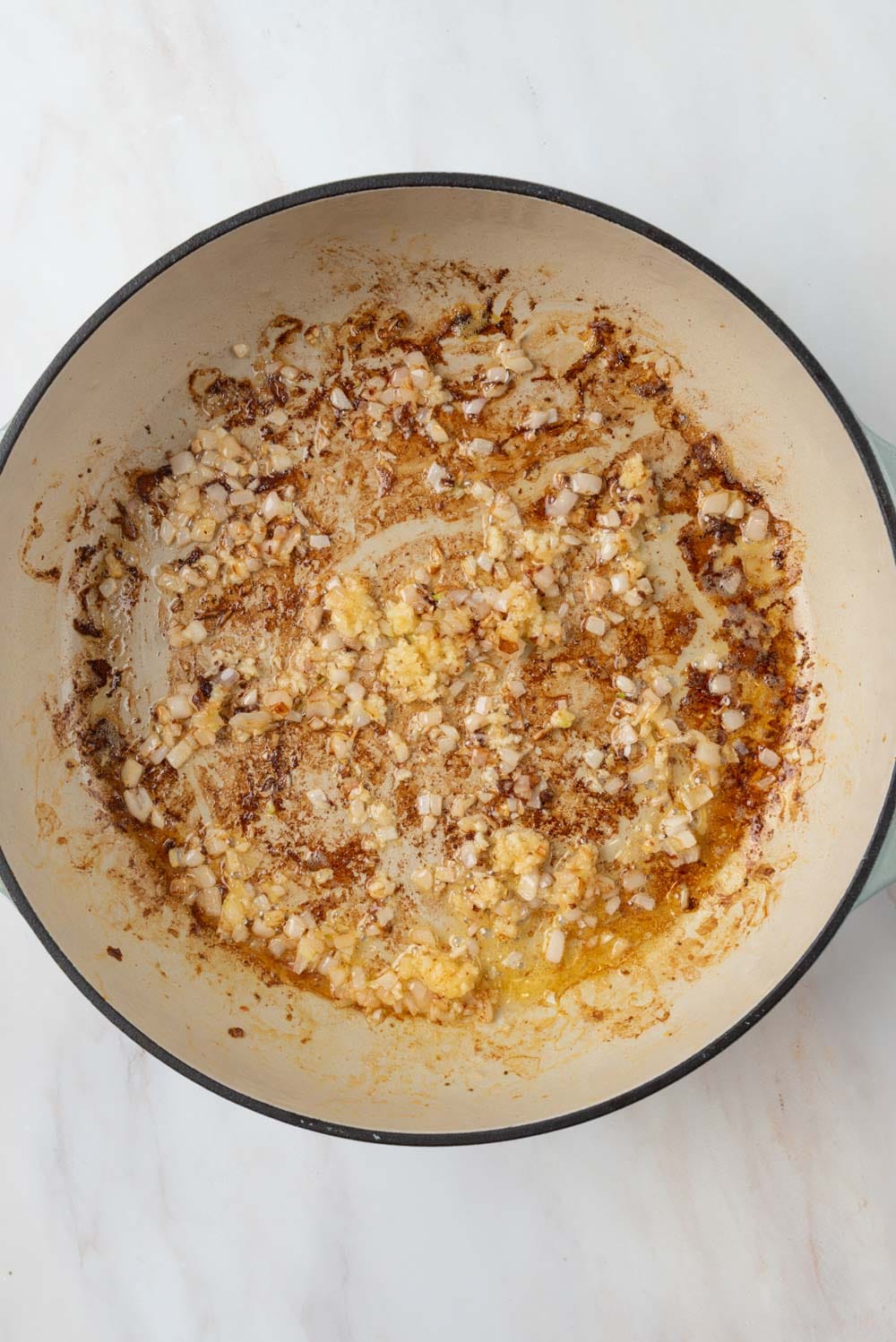
- Step 3: Build the Aromatics: In the same skillet, reduce the heat to medium. Add another tablespoon of butter, then sauté the shallot for 2-3 minutes until softened. Stir in garlic and cook for 30 seconds. If using, add the red pepper flakes.
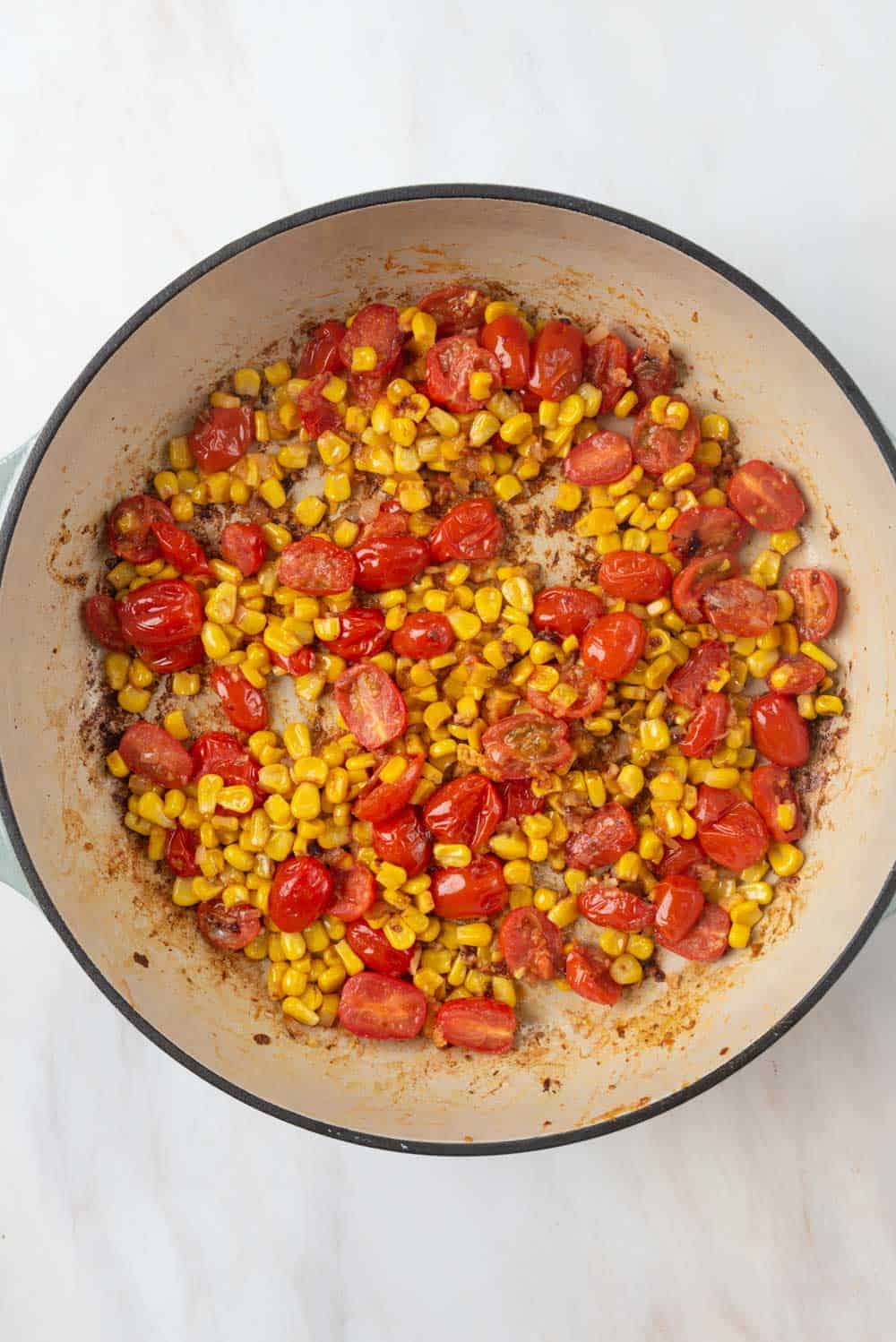
- Step 4: Blister Tomatoes & Add Corn: Add cherry tomatoes to the pan and cook for 3-4 minutes pressing them gently with the back of a spoon, until they burst and release their juices. The tomatoes should be jammy and slightly caramelized. Then stir in 1 cup fresh or frozen corn kernels and cook for 2 minutes.
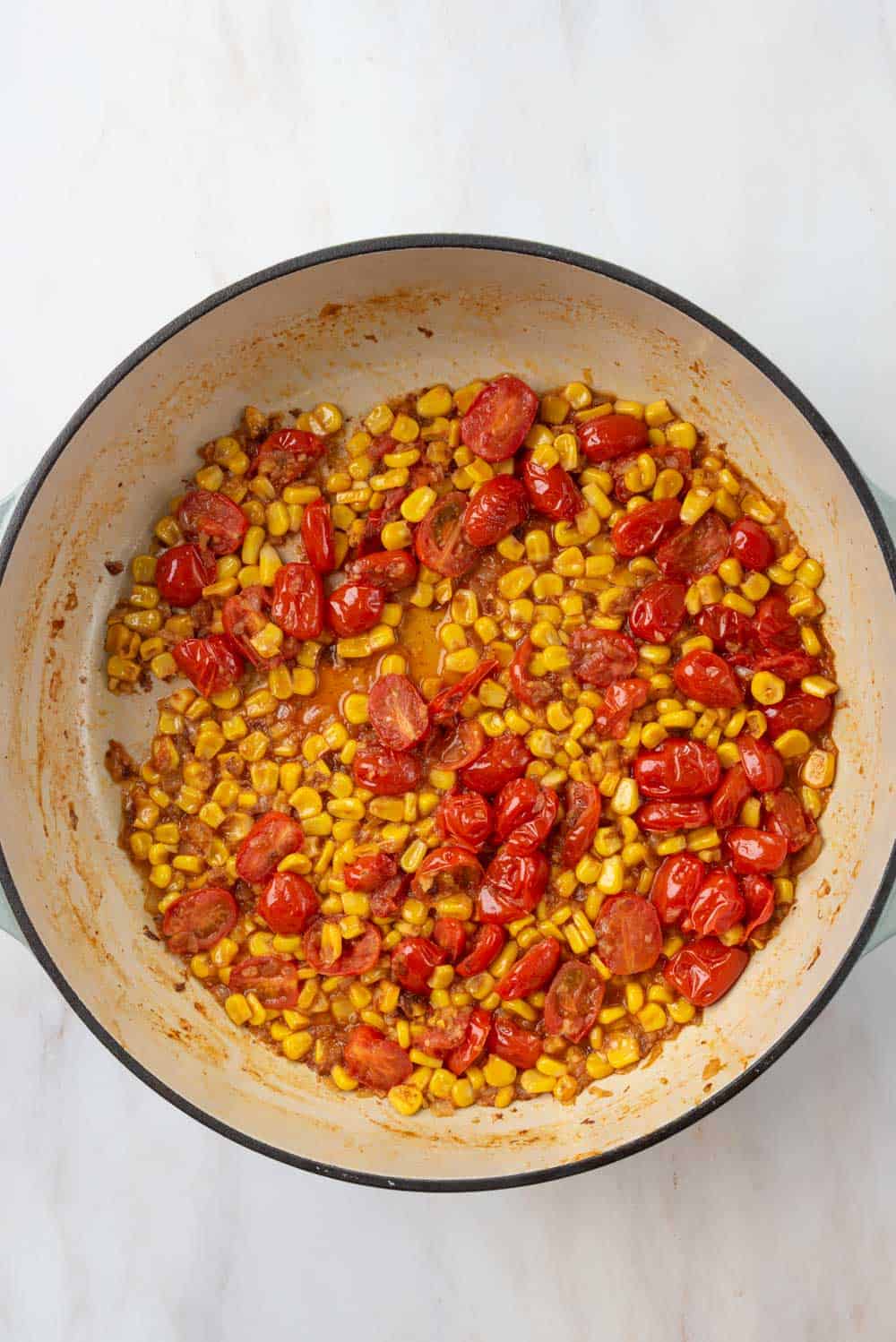
- Step 5: Deglaze: Pour in white wine, scraping up any browned bits. Simmer for 2-3 minutes. Add shrimp stock and let the sauce reduce slightly, about 4 minutes.
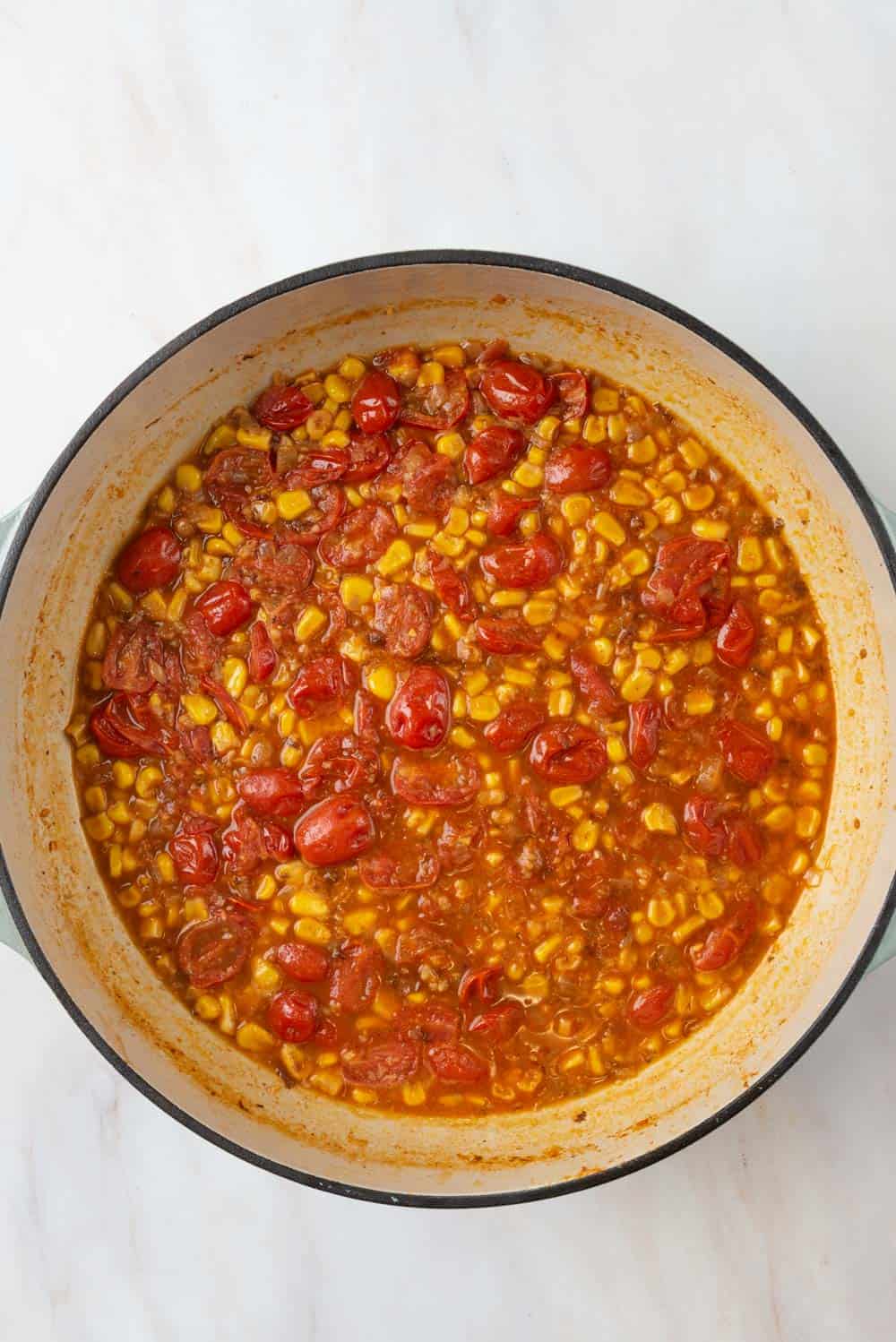
- Step 6: Build the Sauce: Add shrimp stock and bring the sauce to a gentle simmer, and cook for 3-4 minutes, allowing it to reduce slightly and concentrate in flavor.
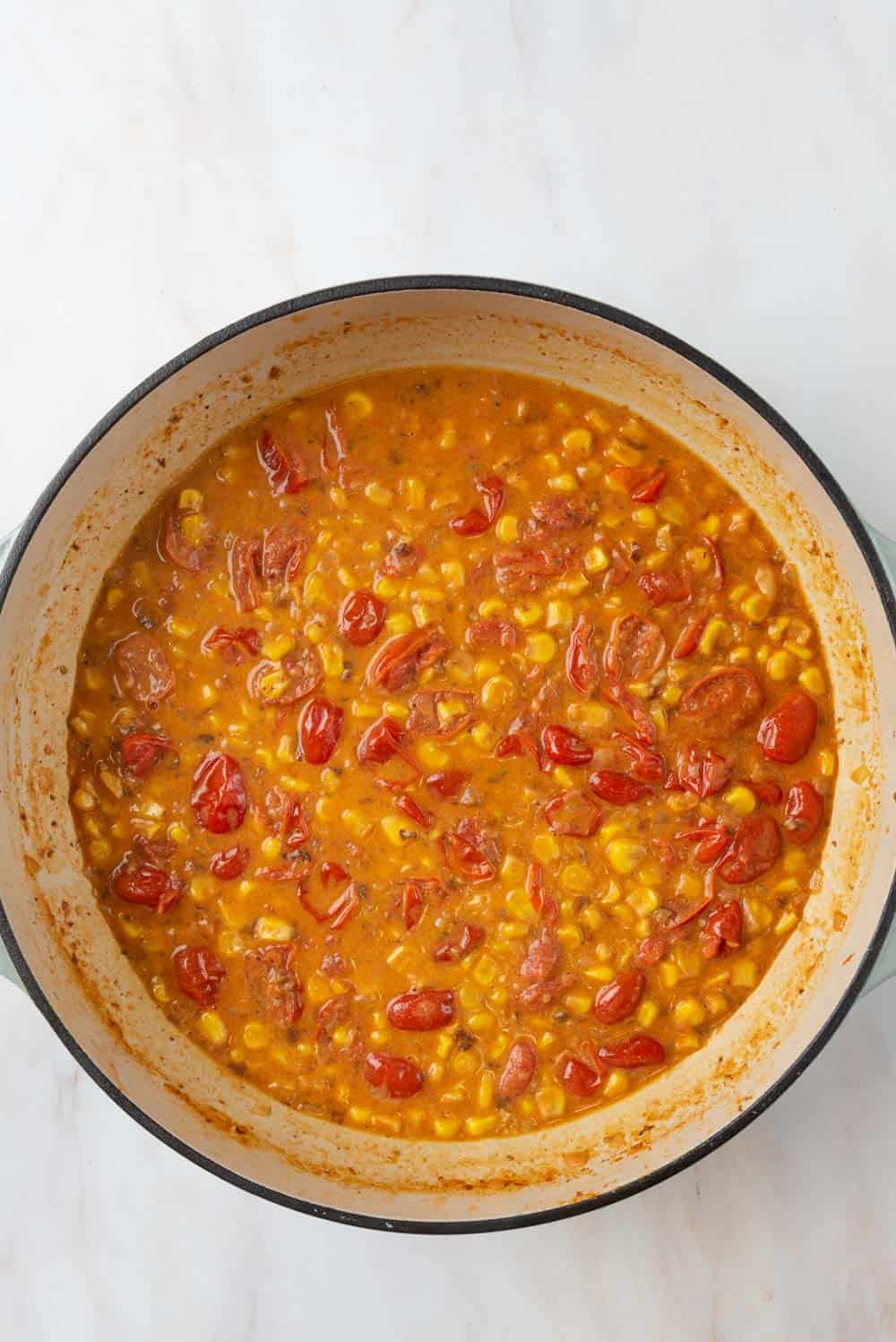
- Step 7: Finish with Butter & Lemon: If using, heavy cream (optional, for a creamier sauce). Remove the pan from heat. Add 3 tablespoons unsalted butter, cold and cubed one or two cubes at a time, swirling the pan continuously until each addition is fully melted and the sauce looks glossy and emulsified. Stir in the juice and zest from a lemon. Taste and adjust salt, pepper, and lemon as needed.
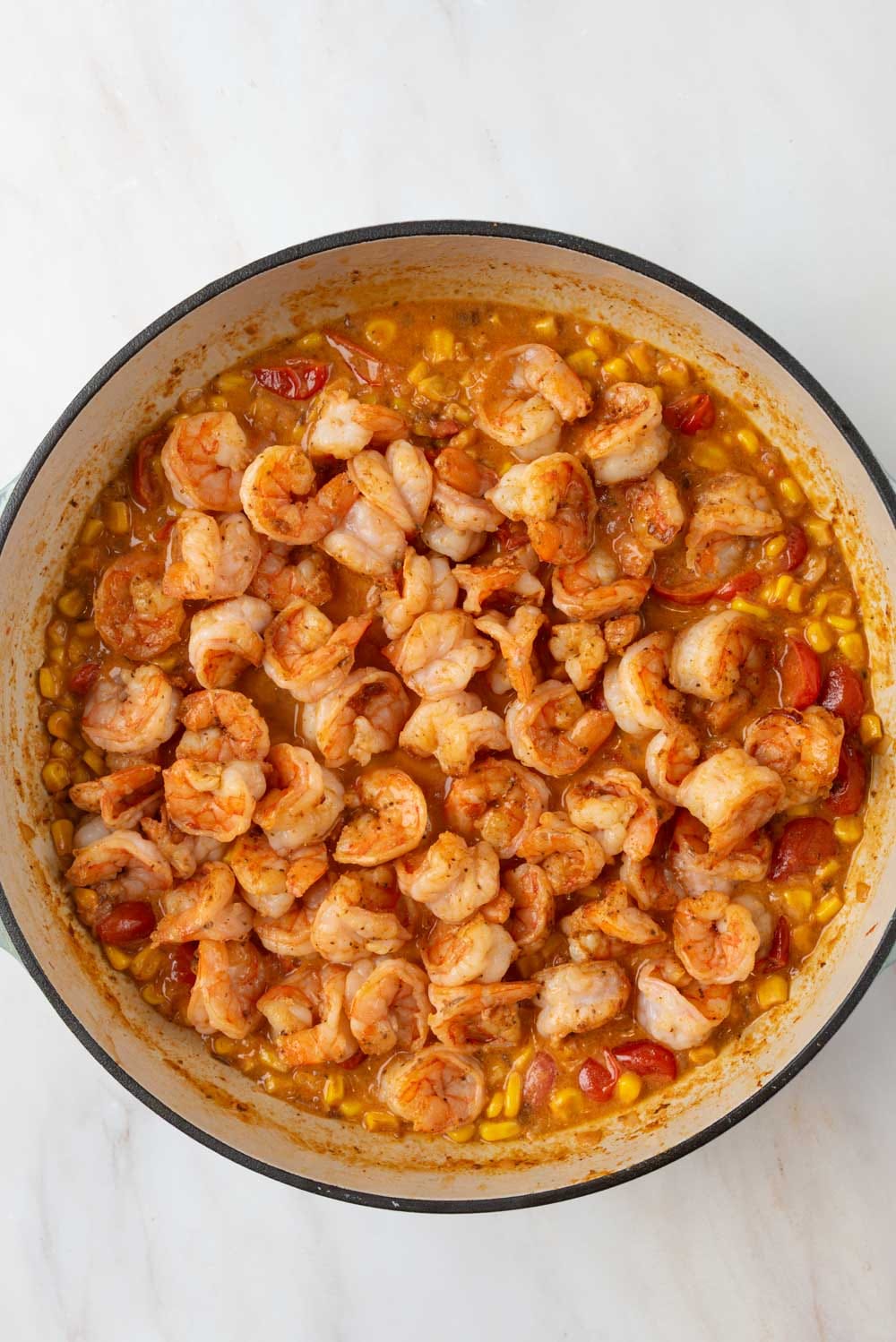
- Step 8: Toss the pasta and return the shrimp: Add the cooked pasta to the pan and toss to coat, adding a splash of reserved pasta water if needed to loosen the sauce. Return the shrimp (and any resting juices from the plate) to the pan and toss gently to combine. Add parsley and toss once more.
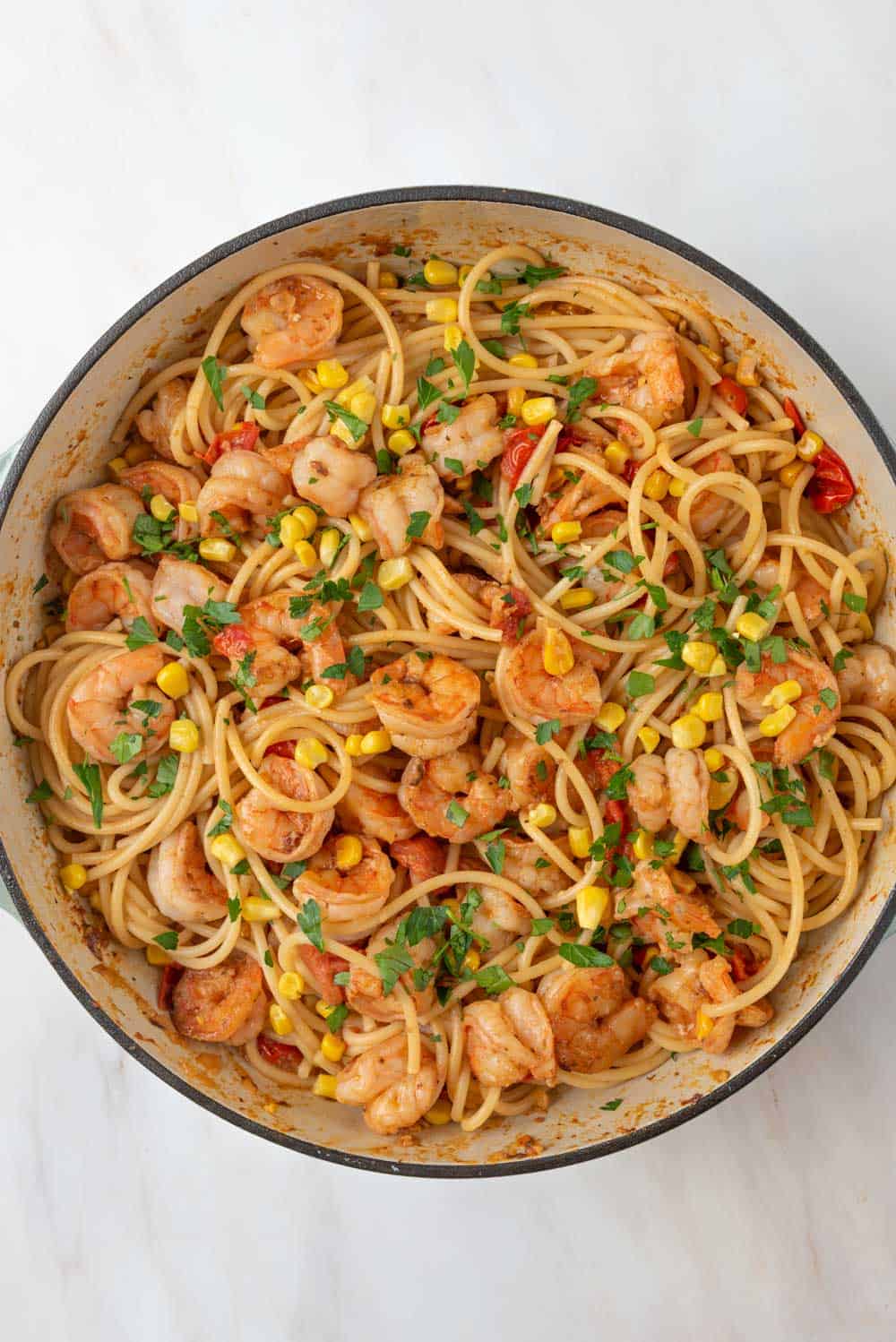
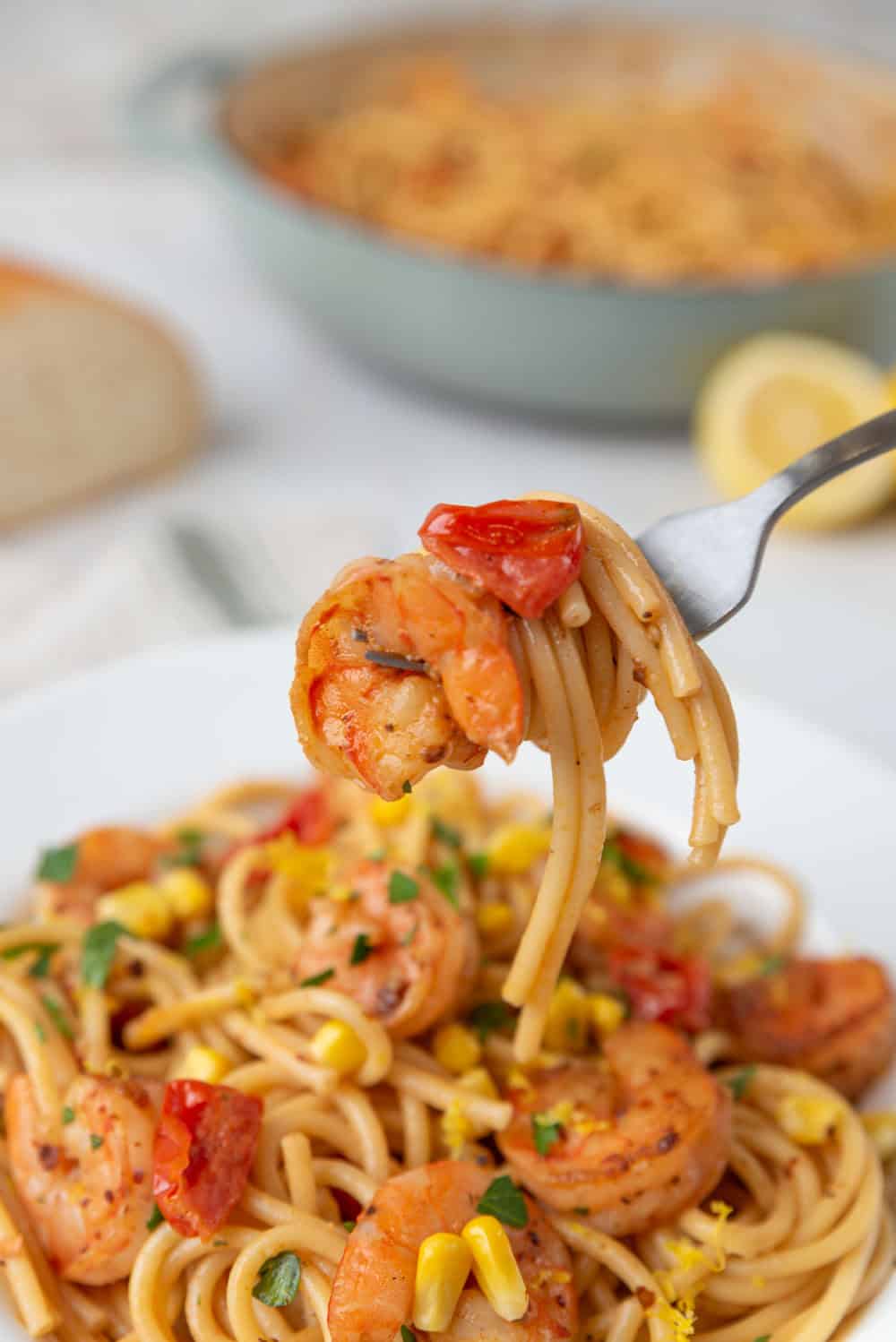
- Step 9: Serve: Finish each serving with desired garnishes; another pinch of Old Bay, lemon zest, a drizzle of good olive oil, parmesan, and/or additional parsley. Serve immediately.
Tips for Success: Shrimp Pasta
- Dry your shrimp before seasoning: Moisture is the enemy of a really good sear. If the shrimp go into the pan wet, they'll steam and turn rubbery instead of picking up that golden, slightly caramelized exterior. A minute with paper towels makes a real difference.
- Don't overcrowd the pan: If you're doubling the recipe or using a smaller skillet, cook the shrimp in two batches. Crowding lowers the pan temperature and turns a sear into a steam. Give the shrimp room, and they'll reward you.
- Make your own quick shrimp stock: After peeling the shrimp, simmer the shells in 2 cups of water with a bay leaf, a few peppercorns, and some aromatics (onion, carrot, and/or celery) for 15 to 20 minutes. Strain and use in place of store-bought stock. It takes almost no effort, and the flavor difference is noticeable.
- Al dente matters: The pasta will absorb some sauce in the pan, so pull it from the water when it still has just a bit of bite. It finishes cooking when you toss it with the sauce.
- Pull the pasta when it still has a little chew: It'll continue to cook when you toss it in the hot sauce. Finishing it perfectly al dente in the pan gives you better texture and a sauce that actually clings to the pasta rather than sliding off.
- Swirl the butter in off the heat: The goal is emulsification, not separation. High heat will cause the butter to break and turn greasy. Remove the pan from the burner first, then add the cold butter a couple of cubes at a time, swirling constantly. You'll see the sauce turn silky and glossy.
- Don't skip the pasta water: The starchy cooking water is your sauce insurance policy! It helps emulsify the sauce. An extra splash can rescue a sauce that's reduced too much or help everything come together smoothly.
Substitutions & Variations
- Stock: Use chicken stock if shrimp stock isn't available
- More Veggies: Add spinach or zucchini for extra vegetables
- No white wine: Substitute with additional shrimp stock plus an extra splash of fresh lemon juice to replicate the acidity.
- Scallops instead of shrimp: This sauce works wonderfully with seared sea scallops as well. Dry them thoroughly, sear in a very hot pan with butter until golden on both sides, and proceed exactly as you would with shrimp. Lump crab meat will also work.
- Sun-dried tomatoes: In winter, when cherry tomatoes are lackluster, substitute with oil-packed sun-dried tomatoes, roughly chopped. They bring concentrated, sweet-tart flavor and no blistering required. Use just ⅓ cup.
Dietary Variations
- Low-Carb: Serve over zucchini noodles.
- Gluten-free: Use your favorite gluten-free pasta. Brown rice linguine or chickpea-based pasta both hold up well.
- Dairy-free: Omit the butter and heavy cream. In their place, use a high-quality vegan butter (Miyoko's is my go-to) and an extra splash of shrimp stock to finish the sauce. The sauce will be slightly less rich but still very flavorful.
- Whole30/Paleo: Omit the pasta and serve the shrimp and sauce over zucchini noodles, cauliflower rice, or sautéed greens. Skip the wine and use extra shrimp stock in its place.
Equipment Needed
- Large pot: For boiling pasta. You need at least a 6-quart pot so the pasta has room to move.
- Large skillet (12-inch): A wide skillet gives the shrimp room to sear properly and gives you plenty of surface area for the sauce. Stainless steel or a well-seasoned cast iron is ideal for building fond (those browned bits that flavor the sauce). A nonstick pan works but won't give you as much color on the shrimp.
- Tongs: For flipping shrimp efficiently and tossing the pasta without breaking it.
- Fine mesh strainer: If you're making homemade shrimp stock, you'll need this to strain out the shells.
- Microplane or zester: For lemon zest. This is a small tool that makes a disproportionate difference in final flavor.
- Colander: For draining the pasta. (Don't forget to scoop that pasta water first!)
- Ladle or measuring cup: For scooping pasta water before draining.
Storage Instructions
- Refrigerator: Store leftovers in an airtight container for up to 2 days. The pasta will absorb some of the sauce as it sits.
- Reheating: Warm gently in a skillet over medium-low heat with a splash of pasta water, chicken broth, or extra shrimp stock to rehydrate the sauce. Stir frequently. Avoid the microwave if you can. Shrimp reheated in a microwave can turn rubbery quickly.
- Freezing: Not recommended for Old Bay shrimp pasta. Shrimp don't freeze well once cooked (they become tough and rubbery), and cream-based sauces tend to break when frozen and thawed (if using the optional cream).
Serving Suggestions for Old Bay Shrimp Pasta
- Crusty bread for soaking up the sauce
- Simple arugula salad with lemon or red wine vinaigrette
- Grilled asparagus or green beans
- A chilled glass of Sauvignon Blanc or Pinot Grigio
FAQs -
Yes, substitute with additional shrimp stock and a splash of lemon juice.
Nope, the dish is excellent without it! This Old Bay shrimp pasta is really about the white wine, butter, and lemon. The cream adds a richer finish that I love, but it isn't necessary.
Absolutely! Thaw completely and pat dry before cooking.
Yes, drain the juice from the canned tomatoes. Sun-dried tomatoes are also a great substitute, but use just ⅓ cup.
This usually means the pan was too hot when you added the butter. Remove it from the heat entirely, add an ice cube or a small splash of cold pasta water, and stir rapidly. This should bring the emulsification back.
Love This Old Bay Shrimp Pasta Recipe? Please tag @poppytrailtable on Instagram and Facebook and leave a star rating⭐ ⭐ ⭐ ⭐ ⭐ and review below! Thank you!
Recent Recipes:
Looking for more recipes to enjoy? Try these:

Recipe
Old Bay Shrimp Pasta | Coastal-Inspired Pasta Recipe
Equipment
- Large pot: For boiling pasta. You need at least a 6-quart pot so the pasta has room to move.
- Large skillet (12-inch): A wide skillet gives the shrimp room to sear properly and gives you plenty of surface area for the sauce. Stainless steel or a well-seasoned cast iron is ideal for building fond (those browned bits that flavor the sauce). A nonstick pan works but won't give you as much color on the shrimp.
- Tongs: For flipping shrimp efficiently and tossing the pasta without breaking it.
- Fine mesh strainer: If you're making homemade shrimp stock, you'll need this to strain out the shells.
- Microplane or zester: For lemon zest. This is a small tool that makes a disproportionate difference in final flavor.
- Colander: For draining the pasta. (Don't forget to scoop that pasta water first!)
- Ladle or measuring cup: For scooping pasta water before draining.
Ingredients
- 12 oz pasta bucatini, linguine or spaghetti, cooked per package instructions minus 1 to 2 minutes, as it will cook more in the sauce
- 1.5 pounds large shrimp 16/20 or 21/25 count, peeled and deveined
- 3 teaspoons Old Bay seasoning divided
- 1 ½ teaspoon kosher salt + more for salting pasta water
- ¼ teaspoon black pepper
- ¼ teaspoon red pepper flakes *optional
- 2 tablespoons olive oil
- 1 shallot finely chopped (about ¼ cup)
- 3 cloves garlic minced
- 1 ½ cups cherry tomatoes
- 1 cup fresh or frozen corn kernels thawed
- ½ cup dry white wine Sauvignon Blanc or Pinot Grigio
- ¾ cups shrimp stock or seafood stock
- 2-3 tablespoons heavy cream optional, for a creamier sauce
- 4 tablespoons unsalted butter cold and cubed
- 1 lemon zested and juiced
- ¼ cup fresh flat-leaf parsley roughly chopped
Instructions
- Step 1: Prep & Season Shrimp & Cook Pasta: Pat 1.5 pounds large shrimp (16/20 or 21/25 count), peeled and deveined, completely dry with paper towels. This is important for a good sear. In a bowl, toss the shrimp with 2 teaspoons Old Bay seasoning and ½ teaspoon kosher salt. Set aside while the pasta cooks. Bring a large pot of heavily salted water to a boil. Cook 12 ounces of pasta according to package directions until just before al dente. Usually, 1 to 2 minutes less than the recommended cooking time on the package. Before draining, reserve about 1 cup of pasta water. You may need it to loosen the sauce. Drain pasta and set aside.
- Step 2: Sear Shrimp: Heat 1 tablespoon olive oil and 1 tablespoon butter in a large skillet over medium-high heat. Add shrimp in a single layer and sear 1-2 minutes per side. Remove and set aside.
- Step 3: Build the Aromatics: In the same skillet, reduce the heat to medium. Add another tablespoon of butter, then sauté the shallot for 2-3 minutes until softened. Stir in garlic and cook for 30 seconds. If using, add the red pepper flakes.
- Step 4: Blister Tomatoes & Add Corn: Add cherry tomatoes to the pan and cook for 3-4 minutes pressing them gently with the back of a spoon, until they burst and release their juices. The tomatoes should be jammy and slightly caramelized. Then stir in 1 cup fresh or frozen corn kernels and cook for 2 minutes.
- Step 5: Deglaze: Pour in white wine, scraping up any browned bits. Simmer for 2-3 minutes. Add shrimp stock and let the sauce reduce slightly, about 4 minutes.
- Step 6: Build the Sauce: Add shrimp stock and bring the sauce to a gentle simmer and cook for 3-4 minutes, allowing it to reduce slightly and concentrate in flavor.
- Step 7: Finish with Butter & Lemon: If using, heavy cream (optional, for a creamier sauce). Remove the pan from heat. Add 3 tablespoons unsalted butter, cold and cubed one or two cubes at a time, swirling the pan continuously until each addition is fully melted and the sauce looks glossy and emulsified. Stir in the juice and zest from a lemon. Taste and adjust salt, pepper, and lemon as needed.
- Step 8: Toss the pasta and return the shrimp: Add the cooked pasta to the pan and toss to coat, adding a splash of reserved pasta water if needed to loosen the sauce. Return the shrimp (and any resting juices from the plate) to the pan and toss gently to combine. Add parsley and toss once more.
- Step 9: Serve: Finish each serving with desired garnishes; another pinch of Old Bay, lemon zest, a drizzle of good olive oil, parmesan, and/or additional parsley. Serve immediately.
Notes
Storage Instructions
- Refrigerator: Store leftovers in an airtight container for up to 2 days. The pasta will absorb some of the sauce as it sits.
- Reheating: Warm gently in a skillet over medium-low heat with a splash of pasta water, chicken broth, or extra shrimp stock to rehydrate the sauce. Stir frequently. Avoid the microwave if you can. Shrimp reheated in a microwave can turn rubbery quickly.
- Freezing: Not recommended for Old Bay shrimp pasta. Shrimp don't freeze well once cooked (they become tough and rubbery), and cream-based sauces tend to break when frozen and thawed (if using the optional cream).
Tips for Success: Shrimp Pasta
- Dry your shrimp before seasoning: Moisture is the enemy of a really good sear. If the shrimp go into the pan wet, they'll steam and turn rubbery instead of picking up that golden, slightly caramelized exterior. A minute with paper towels makes a real difference.
- Don't overcrowd the pan: If you're doubling the recipe or using a smaller skillet, cook the shrimp in two batches. Crowding lowers the pan temperature and turns a sear into a steam. Give the shrimp room, and they'll reward you.
- Make your own quick shrimp stock: After peeling the shrimp, simmer the shells in 2 cups of water with a bay leaf, a few peppercorns, and some aromatics (onion, carrot, and/or celery) for 15 to 20 minutes. Strain and use in place of store-bought stock. It takes almost no effort, and the flavor difference is noticeable.
- Al dente matters: The pasta will absorb some sauce in the pan, so pull it from the water when it still has just a bit of bite. It finishes cooking when you toss it with the sauce.
- Pull the pasta when it still has a little chew: It'll continue to cook when you toss it in the hot sauce. Finishing it perfectly al dente in the pan gives you better texture and a sauce that actually clings to the pasta rather than sliding off.
- Swirl the butter in off the heat: The goal is emulsification, not separation. High heat will cause the butter to break and turn greasy. Remove the pan from the burner first, then add the cold butter a couple of cubes at a time, swirling constantly. You'll see the sauce turn silky and glossy.
- Don't skip the pasta water: The starchy cooking water is your sauce insurance policy! It helps emulsify the sauce. An extra splash can rescue a sauce that's reduced too much or help everything come together smoothly.
Comments
No Comments