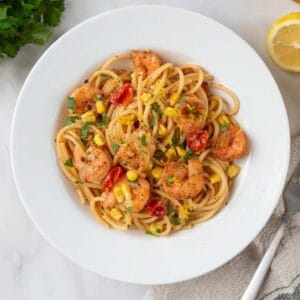
Old Bay Shrimp Pasta | Coastal-Inspired Pasta Recipe
Bright, buttery, and full of bold coastal flavor, this Old Bay Shrimp Pasta combines sweet corn, cherry tomatoes, white wine, and a touch of lemon and creates a silky pan sauce that clings to every strand in just 30 minutes.
Equipment
- Large pot: For boiling pasta. You need at least a 6-quart pot so the pasta has room to move.
- Large skillet (12-inch): A wide skillet gives the shrimp room to sear properly and gives you plenty of surface area for the sauce. Stainless steel or a well-seasoned cast iron is ideal for building fond (those browned bits that flavor the sauce). A nonstick pan works but won't give you as much color on the shrimp.
- Tongs: For flipping shrimp efficiently and tossing the pasta without breaking it.
- Fine mesh strainer: If you're making homemade shrimp stock, you'll need this to strain out the shells.
- Microplane or zester: For lemon zest. This is a small tool that makes a disproportionate difference in final flavor.
- Colander: For draining the pasta. (Don't forget to scoop that pasta water first!)
- Ladle or measuring cup: For scooping pasta water before draining.
Ingredients
- 12 oz pasta bucatini, linguine or spaghetti, cooked per package instructions minus 1 to 2 minutes, as it will cook more in the sauce
- 1.5 pounds large shrimp 16/20 or 21/25 count, peeled and deveined
- 3 teaspoons Old Bay seasoning divided
- 1 ½ teaspoon kosher salt + more for salting pasta water
- ¼ teaspoon black pepper
- ¼ teaspoon red pepper flakes *optional
- 2 tablespoons olive oil
- 1 shallot finely chopped (about ¼ cup)
- 3 cloves garlic minced
- 1 ½ cups cherry tomatoes
- 1 cup fresh or frozen corn kernels thawed
- ½ cup dry white wine Sauvignon Blanc or Pinot Grigio
- ¾ cups shrimp stock or seafood stock
- 2-3 tablespoons heavy cream optional, for a creamier sauce
- 4 tablespoons unsalted butter cold and cubed
- 1 lemon zested and juiced
- ¼ cup fresh flat-leaf parsley roughly chopped
Instructions
- Step 1: Prep & Season Shrimp & Cook Pasta: Pat 1.5 pounds large shrimp (16/20 or 21/25 count), peeled and deveined, completely dry with paper towels. This is important for a good sear. In a bowl, toss the shrimp with 2 teaspoons Old Bay seasoning and ½ teaspoon kosher salt. Set aside while the pasta cooks. Bring a large pot of heavily salted water to a boil. Cook 12 ounces of pasta according to package directions until just before al dente. Usually, 1 to 2 minutes less than the recommended cooking time on the package. Before draining, reserve about 1 cup of pasta water. You may need it to loosen the sauce. Drain pasta and set aside.
- Step 2: Sear Shrimp: Heat 1 tablespoon olive oil and 1 tablespoon butter in a large skillet over medium-high heat. Add shrimp in a single layer and sear 1-2 minutes per side. Remove and set aside.
- Step 3: Build the Aromatics: In the same skillet, reduce the heat to medium. Add another tablespoon of butter, then sauté the shallot for 2-3 minutes until softened. Stir in garlic and cook for 30 seconds. If using, add the red pepper flakes.
- Step 4: Blister Tomatoes & Add Corn: Add cherry tomatoes to the pan and cook for 3-4 minutes pressing them gently with the back of a spoon, until they burst and release their juices. The tomatoes should be jammy and slightly caramelized. Then stir in 1 cup fresh or frozen corn kernels and cook for 2 minutes.
- Step 5: Deglaze: Pour in white wine, scraping up any browned bits. Simmer for 2-3 minutes. Add shrimp stock and let the sauce reduce slightly, about 4 minutes.
- Step 6: Build the Sauce: Add shrimp stock and bring the sauce to a gentle simmer and cook for 3-4 minutes, allowing it to reduce slightly and concentrate in flavor.
- Step 7: Finish with Butter & Lemon: If using, heavy cream (optional, for a creamier sauce). Remove the pan from heat. Add 3 tablespoons unsalted butter, cold and cubed one or two cubes at a time, swirling the pan continuously until each addition is fully melted and the sauce looks glossy and emulsified. Stir in the juice and zest from a lemon. Taste and adjust salt, pepper, and lemon as needed.
- Step 8: Toss the pasta and return the shrimp: Add the cooked pasta to the pan and toss to coat, adding a splash of reserved pasta water if needed to loosen the sauce. Return the shrimp (and any resting juices from the plate) to the pan and toss gently to combine. Add parsley and toss once more.
- Step 9: Serve: Finish each serving with desired garnishes; another pinch of Old Bay, lemon zest, a drizzle of good olive oil, parmesan, and/or additional parsley. Serve immediately.
Notes
Storage Instructions
- Refrigerator: Store leftovers in an airtight container for up to 2 days. The pasta will absorb some of the sauce as it sits.
- Reheating: Warm gently in a skillet over medium-low heat with a splash of pasta water, chicken broth, or extra shrimp stock to rehydrate the sauce. Stir frequently. Avoid the microwave if you can. Shrimp reheated in a microwave can turn rubbery quickly.
- Freezing: Not recommended for Old Bay shrimp pasta. Shrimp don't freeze well once cooked (they become tough and rubbery), and cream-based sauces tend to break when frozen and thawed (if using the optional cream).
Tips for Success: Shrimp Pasta
- Dry your shrimp before seasoning: Moisture is the enemy of a really good sear. If the shrimp go into the pan wet, they'll steam and turn rubbery instead of picking up that golden, slightly caramelized exterior. A minute with paper towels makes a real difference.
- Don't overcrowd the pan: If you're doubling the recipe or using a smaller skillet, cook the shrimp in two batches. Crowding lowers the pan temperature and turns a sear into a steam. Give the shrimp room, and they'll reward you.
- Make your own quick shrimp stock: After peeling the shrimp, simmer the shells in 2 cups of water with a bay leaf, a few peppercorns, and some aromatics (onion, carrot, and/or celery) for 15 to 20 minutes. Strain and use in place of store-bought stock. It takes almost no effort, and the flavor difference is noticeable.
- Al dente matters: The pasta will absorb some sauce in the pan, so pull it from the water when it still has just a bit of bite. It finishes cooking when you toss it with the sauce.
- Pull the pasta when it still has a little chew: It'll continue to cook when you toss it in the hot sauce. Finishing it perfectly al dente in the pan gives you better texture and a sauce that actually clings to the pasta rather than sliding off.
- Swirl the butter in off the heat: The goal is emulsification, not separation. High heat will cause the butter to break and turn greasy. Remove the pan from the burner first, then add the cold butter a couple of cubes at a time, swirling constantly. You'll see the sauce turn silky and glossy.
- Don't skip the pasta water: The starchy cooking water is your sauce insurance policy! It helps emulsify the sauce. An extra splash can rescue a sauce that's reduced too much or help everything come together smoothly.
Nutrition
Calories: 459kcalCarbohydrates: 43gProtein: 33gFat: 15gSaturated Fat: 6gPolyunsaturated Fat: 1gMonounsaturated Fat: 6gCholesterol: 262mgSodium: 1721mgPotassium: 449mgFiber: 5gSugar: 10g
Nutrition Facts
Old Bay Shrimp Pasta | Coastal-Inspired Pasta Recipe
Amount per Serving
Calories
459
% Daily Value*
Fat
15
g
23
%
Saturated Fat
6
g
38
%
Polyunsaturated Fat
1
g
Monounsaturated Fat
6
g
Cholesterol
262
mg
87
%
Sodium
1721
mg
75
%
Potassium
449
mg
13
%
Carbohydrates
43
g
14
%
Fiber
5
g
21
%
Sugar
10
g
11
%
Protein
33
g
66
%
* Percent Daily Values are based on a 2000 calorie diet.
Did you make this recipe?Tag us on Instagram!